
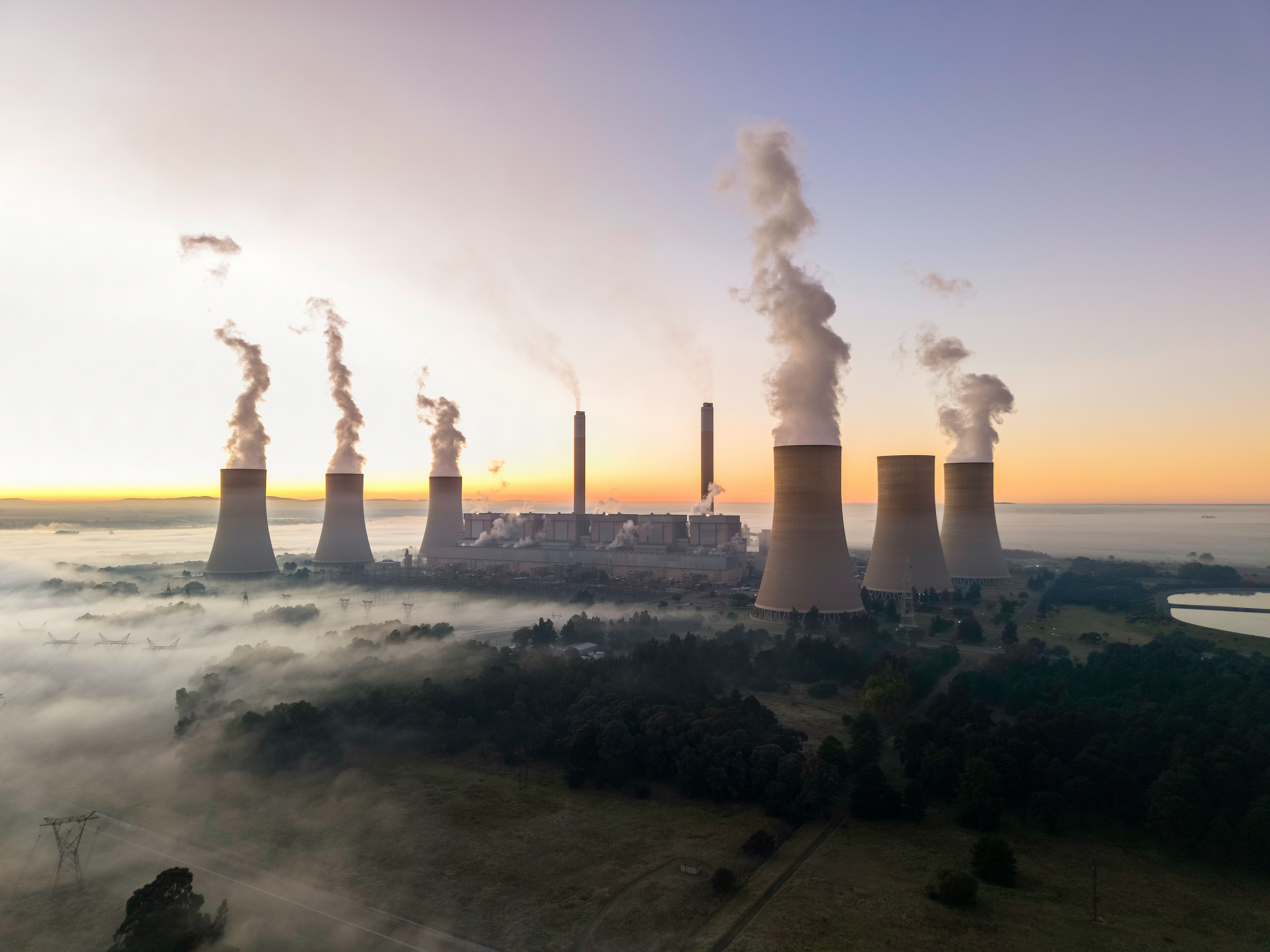
The story in four numbers
The fuel loading at Tianwan Unit 7 is a commissioning milestone for China's eighth reactor at a site that has been continuously expanding since 1999, and the firm reads it as a data point in the variable that matters most for global energy infrastructure analysis: whether the $5-10 billion per gigawatt construction cost gap between Chinese and Western nuclear can close within a policy timeframe relevant to the 2030-2050 decarbonisation commitments that democratic governments have made. China is building nuclear at illustratively $3-4 billion per gigawatt; the United Kingdom's Hinkley Point C is tracking at illustratively $12-15 billion per gigawatt; and the United States' Vogtle expansion - the first American reactor completed in three decades - settled at a cost basis that makes new nuclear economically indefensible without extraordinary public subsidy. Until the West closes that gap, the nuclear decarbonisation story is a China-and-Russia story, and the Tianwan milestone is evidence that the gap is not closing spontaneously.
The event and what it measures
Fuel loading is the commissioning stage at which a nuclear reactor transitions from a civil engineering project to an operating nuclear facility - the point at which enriched uranium fuel assemblies are placed into the reactor vessel for the first time, establishing the conditions required for a controlled fission chain reaction. For Tianwan Unit 7, the milestone confirms that the VVER-1200 construction program has cleared its most consequential pre-operational hurdle and that commercial operation is a matter of months rather than years.
The 163 fuel assemblies loaded into Unit 7 represent the complete initial fuel charge for a VVER-1200 reactor core. Each assembly is a hexagonal structure containing enriched uranium dioxide fuel rods filled with sintered pellets at a U-235 concentration of illustratively 3.5-4.5 percent - above the 0.7 percent found in natural uranium, below the 20 percent threshold that defines low-enriched uranium under Non-Proliferation Treaty frameworks. The loading operation, conducted by remote-control crane systems operating under the reactor building's shielded dome, proceeds over multiple days and requires continuous radiation monitoring and quality verification at each assembly placement. Remote-control methodology is the universal standard for modern fuel handling in large pressurized water reactors, adopted to minimize human dose exposure during the most radioactively active phase of the commissioning sequence.
What the event measures analytically - not merely technically - is schedule adherence in the China-Russia nuclear cooperation program under conditions of significant geopolitical stress. Western governments imposed sweeping sanctions on Russian civil nuclear exports following the 2022 Ukraine invasion, but China explicitly declined to align those measures with its own economic posture toward Russia, and the Tianwan Unit 7 timeline confirms that the bilateral nuclear cooperation framework has continued to function without the disruption that some Western policy analysis expected. For investors and policy analysts assessing nuclear's contribution to the global energy transition, this is not a neutral data point: it establishes that the China-Russia nuclear axis is resilient to the geopolitical pressures that were expected, by some external forecasts, to constrain the pace of Chinese nuclear expansion.
The VVER-1200 - what the design specification actually means
The VVER-1200 is Rosatom's third-generation-plus pressurized water reactor, and the comparison with its predecessor that matters for energy economics is not the nameplate capacity upgrade but the passive safety architecture that changes the operational risk profile in ways that affect regulatory timelines, insurance costs, and public acceptance in democratic systems.
The VVER series - Vodo-Vodyanoy Energetichesky Reaktor, or water-cooled water-moderated power reactor - is the Soviet and Russian successor to the pressurized water reactor lineage developed in the United States in the 1950s and 1960s. Both use ordinary water as coolant and neutron moderator, but the fuel assembly geometry differs: VVER designs use hexagonal assemblies, while American PWRs use square lattice arrangements. The hexagonal geometry distributes neutron flux more uniformly across the reactor core, which has operational advantages for fuel utilization efficiency under extended burnup conditions. The VVER-1000 at Tianwan's first six units carries an operational record spanning two decades in the Chinese deployment, with capacity factors - the ratio of actual generation to theoretical maximum generation - illustratively consistent with the global pressurized water reactor fleet average of 85-90 percent.
The VVER-1200 retains the fundamental VVER architecture while delivering three substantive changes: a nameplate capacity increase from approximately 1,000 MWe to approximately 1,200 MWe; an extension of the design lifespan from 40 years to 60 years (which changes the levelized cost of electricity calculation materially, as the capital cost is amortized over a longer generation period); and the incorporation of passive safety systems that represent the most consequential design departure from the earlier generation. The passive safety architecture consists primarily of a passive heat removal system capable of maintaining adequate core cooling for 72 hours following a shutdown event, using gravity-fed water tanks positioned above the reactor vessel. No pumps, valves, operator actions, or external power are required during this 72-hour window; the physics of convection and gravity alone drive the cooling flow through the primary circuit. This is the direct design response to the Fukushima Daiichi accident, which demonstrated that the critical failure mode for a modern light water reactor under extreme external events is not the reactor shutdown itself - which occurs automatically on grid disconnection - but the subsequent loss of the active cooling systems required to remove decay heat in the hours and days following shutdown.
The metric that distinguishes the VVER-1200 from its predecessor is not the additional 200 megawatts of nameplate capacity but the passive safety architecture that removes the operator-action dependency from the most consequential emergency scenario - and that design change is what makes the construction cost comparison with Western Generation III+ equivalents analytically tractable, because both sides of the comparison are now solving the same safety specification problem from very different cost bases.
The 163 fuel assemblies at Tianwan Unit 7 will sustain an 18-to-24-month operating cycle before a partial reload replaces depleted assemblies with fresh fuel. VVER-1200 refuelling replaces approximately one-third of the fuel load per cycle, rotating assemblies through different core positions to optimise neutron utilization and minimize the enrichment requirement per unit of electricity generated. This fuel management strategy affects the uranium demand calculation: a VVER-1200 operating a 24-month cycle consumes illustratively less natural uranium per unit of electricity output than a VVER-1000 operating an 18-month cycle, though the absolute annual consumption is higher due to the larger core size.
Tianwan as a capacity compounding platform
Tianwan is not a plant in the sense that single-unit or dual-unit nuclear facilities are plants. It is a platform - a site that has been continuously expanding for more than two decades, accumulating supply chain relationships, regulatory precedents, trained workforce, and specialized infrastructure that reduce the marginal cost and schedule risk of each successive unit below the cost baseline of a greenfield nuclear site.
The Tianwan expansion follows a multi-decade arc that began with a 1992 agreement between China and Russia establishing the terms of the civil nuclear cooperation that would eventually produce eight units. Units 1 and 2, both VVER-1000 designs with approximately 1,000 MWe of nameplate capacity each, achieved commercial operation in 2007 and 2008, establishing the site's operational and regulatory framework. Units 3 and 4, following the same VVER-1000 design envelope with incremental construction efficiency refinements, entered commercial operation by illustratively 2018. Units 5 and 6, the final tranche of VVER-1000 units, followed by illustratively 2021. Units 7 and 8, the current expansion, represent the transition to the VVER-1200 generation and will bring the site's total installed capacity to illustratively 8,000-8,400 MWe across all eight units when both are commercially operational.
The designation of Tianwan as the world's largest nuclear power plant reflects this cumulative capacity rather than any single-unit specification. At illustratively 6,000-8,400 MWe of combined capacity, the site matches or exceeds any other single nuclear facility globally on an installed-capacity basis. That scale creates network effects that are underappreciated in most external analysis: the site amortizes specialized equipment, trained operators, maintenance infrastructure, waste management logistics, and regulatory relationships across eight units rather than two, which is the primary mechanism through which multi-unit Chinese nuclear sites achieve construction cost efficiencies that their Western single-unit counterparts cannot replicate. The regulatory approval pathway for Unit 7 is materially shorter and less expensive than for a new site precisely because the National Nuclear Safety Administration has inspected, approved, and operated equivalent reactor designs at the same location for two decades.
Tianwan's VVER technology track runs in parallel with China's domestic HPR-1000 (Hualong One) program, which deploys a Chinese-designed pressurized water reactor at Fuqing in Fujian Province, Fangchenggang in Guangxi, and an increasing number of additional sites as the domestic design matures. The strategic logic of maintaining both tracks is clear: the Russian technology relationship provides proven performance data and upper-capacity-tier reactor access while the domestic program builds the intellectual property base required for nuclear exports and long-term supply chain independence from foreign reactor vendors. The Hualong One is currently under construction or operating in Pakistan, and discussions about a potential UK deployment at Bradwell B represent the most ambitious Chinese nuclear export initiative in a Western democracy, though the project has faced extended regulatory and political scrutiny that reflects the broader tension between nuclear supply chain economics and energy security sovereignty in democratic systems.
The construction cost gap - four drivers and their sensitivity to policy
The construction cost differential between Chinese and Western nuclear is the most consequential variable in the global energy transition analysis, and it is the variable whose resolution the Tianwan milestone helps calibrate. The firm's framework identifies four measurable drivers of the gap, each carrying different sensitivity to policy intervention and market development timelines.
The first driver is supply chain concentration. China has built, over two decades of sustained nuclear investment, a domestic supply chain for nuclear-grade forgings, pressure vessels, steam generators, and specialized components that is not available to Western reactor projects at competitive pricing. The reactor pressure vessel - the most technically demanding single component in a nuclear plant, a steel cylinder typically four to five meters in diameter and 200-400 millimeters thick, manufactured from steel of exceptional metallurgical purity to resist neutron embrittlement over a 60-year operational life - requires forging capabilities that only a small number of foundries worldwide possess. Japan Steel Works has historically been the primary Western supplier, and its order book constraints create multi-year lead times that impose schedule risk and pricing power on any project without an alternative domestic source. Chinese foundries, supported by state capital investment in nuclear-grade materials infrastructure, have built domestic pressure vessel and heavy component capacity that removes this bottleneck from the Chinese construction schedule. The cost implication is illustratively a 25-40 percent differential in equipment costs for equivalent reactor designs, compounded by the schedule delay costs that equipment lead times impose on Western project finance structures.
The second driver is regulatory processing speed. Chinese nuclear regulatory approval, conducted through the National Nuclear Safety Administration, operates on timelines materially shorter than those in Western jurisdictions, measured in years rather than decades for a site with an established operating history. Each year of regulatory delay or construction schedule overrun adds illustratively $200-400 million in interest-during-construction financing cost to a project's total cost basis. Western nuclear projects have collectively accumulated extraordinary schedule overruns: France's Flamanville EPR, originally projected for commercial operation by 2012, achieved criticality only in 2024; the United Kingdom's Hinkley Point C carries illustrative completion cost estimates that have escalated from an initial reference price to projections that are multiples of the original figure; and the United States' Vogtle Units 3 and 4, the first American reactors completed in three decades, entered commercial operation in 2023-2024 at a combined cost of approximately $35 billion against an original estimate of $14 billion.
| Reactor | Origin | Capacity | Design Life | Recent Build Time | Illus. Cost / GW |
|---|---|---|---|---|---|
| VVER-1200 | Russia (deployed China) | ~1,200 MWe | 60 years | ~6-7 years | $3-4 bn |
| HPR-1000 | China (domestic) | ~1,200 MWe | 60 years | ~6-7 years | $3-4 bn |
| AP1000 | USA (Westinghouse) | ~1,117 MWe | 60 years | 8 yrs (CN) / 14+ yrs (US) | $4 bn (CN) / $12 bn+ (US) |
| EPR | France (EDF/Framatome) | ~1,600 MWe | 60 years | 14-17 years (overruns) | $10-15 bn |
| BWRX-300 | USA / Canada (SMR) | ~300 MWe | 60 years | TBD (first units in development) | ~$2.5 bn (est.) |
The third driver is workforce continuity. China has maintained an uninterrupted nuclear construction program since the early 2000s, creating a workforce of nuclear-qualified welders, pipe-fitters, electricians, and project managers who transfer continuously between sites within a state enterprise system that does not face the cyclical demand discontinuities that have eroded Western nuclear construction expertise through decades of zero new builds. The United Kingdom's Hinkley Point C project has required substantial investment in apprenticeship and training programs because the workforce that built the last generation of British reactors retired without successors during the 1990s and 2000s. That training cost is embedded in labor rates and project overhead, it compounds every other cost driver, and it is the hardest to close rapidly because workforce competency accumulates over years of continuous project experience rather than through any instructional program.
The Western nuclear cost problem is not a technology problem - the EPR and AP1000 perform as designed when built. It is a production economics problem: two decades of zero new builds have allowed the supply chain, regulatory processing capability, and construction workforce to deteriorate to a point where restoration is a 15-to-20-year process, and that timeline does not help the current project pipeline that governments are trying to accelerate.
The uranium market and China's fuel cycle positioning
The fuel loading at Tianwan Unit 7 is, at the commodity level, a uranium demand event - one of many that China's nuclear expansion trajectory will produce over the coming decade, and the one that most directly connects the Tianwan milestone to a market whose supply-demand balance is visibly tightening under a demand curve that consensus frameworks have consistently underestimated.
A 1.2 GW VVER-1200 unit, operating at a capacity factor of illustratively 90 percent, consumes approximately 25-30 tonnes of enriched uranium per operating year. Tracing this back through the enrichment process - which concentrates the naturally occurring U-235 isotope from its 0.7 percent natural abundance to the 3.5-4.5 percent enrichment level required for commercial reactor fuel - implies a natural uranium consumption of approximately 200-250 tonnes of uranium ore concentrate per year, expressed in industry convention as tonnes of U3O8, per VVER-1200 unit at full operation. Across China's current operating fleet of illustratively 57 GW, aggregate annual natural uranium demand is in the range of 8,000-10,000 tonnes of U3O8, making China the world's largest single consumer of uranium by a margin that widens as new units reach commercial operation.
The path to China's 100 GW target, even under a conservative scenario in which only two-thirds of the announced construction pipeline achieves commercial operation by 2035, implies aggregate natural uranium demand growth of illustratively 50-60 percent above the 2025 level - a demand signal whose magnitude is not in question but whose timing is sensitive to the schedule adherence that Tianwan Unit 7 is helping to validate. The uranium spot market, which recovered from the post-Fukushima depression to levels that make new mine development marginally economic, is not currently pricing a Chinese nuclear trajectory that reaches 100 GW before 2040 with high confidence. The firm reads this pricing gap as a function of the market's historically cautious treatment of Chinese nuclear schedule commitments rather than a fundamental disagreement with the demand arithmetic.
China's uranium procurement strategy is structured around geographic diversification that reflects a national security framing rather than a purely commercial one. The primary supply relationship is with Kazakhstan, which produces approximately 40 percent of global mine output through Kazatomprom and its joint ventures, including arrangements with Chinese partners such as China General Nuclear Power Corporation. Secondary relationships with Namibia - where the Husab mine, one of the world's largest uranium operations, runs under majority Chinese ownership through China General Nuclear Power Group's mining subsidiary - and Canada provide further concentration reduction. The enrichment services layer of the fuel cycle is substantially domestic: China National Nuclear Corporation operates enrichment capacity at facilities in Shaanxi and Gansu Provinces that covers a significant fraction of domestic demand, reducing dependence on Russian enrichment services that characterize much of the non-American, non-Chinese nuclear fleet.
Two decades of uninterrupted construction, shared reactor technology, integrated fuel supply chains, and aligned geopolitical interests have created a nuclear cooperation ecosystem operating at scale independent of Western technology, finance, or regulatory frameworks. The pace at which this axis adds capacity will determine uranium demand growth through 2040 with more certainty than any other single variable in the global energy model - and the Tianwan schedule confirmation implies that axis is performing at the rate its 100 GW target requires.
Every significant Western nuclear program - the UK, France, the United States, Canada, Finland - is rebuilding construction capability from a depleted base while simultaneously maintaining nuclear fuel supply chains that are partially dependent on Russian enrichment services that the same governments are attempting to sanction. The resolution of that contradiction will take a decade or more and will cost more, in both capital and time, than most governments currently acknowledge publicly.
What the construction cost variable actually decides
The firm's view on the Tianwan Unit 7 fuel loading is that it matters less as an isolated commissioning milestone than as a calibration point for the only question in global nuclear analysis that carries structural weight: whether the construction cost gap between Chinese and Western nuclear is a temporary dislocation or a persistent structural feature of the technology landscape.
If the gap is a temporary dislocation - closeable within 10-15 years through supply chain investment, regulatory modernization, workforce development, and innovative financing structures like the regulated asset base model the United Kingdom is applying to Sizewell C - then nuclear energy in democratic market economies remains a viable decarbonisation option and the current policy investment in nuclear revival is strategically sound. If the gap is a persistent structural feature - reflecting fundamental differences in state capacity, capital allocation efficiency, and industrial policy continuity that democratic systems cannot replicate within a politically viable timeframe - then the Western nuclear revival programs currently underway will produce a small number of expensive units that provide energy security benefits but not the scale contribution to carbon reduction that their proponents claim.
The evidence that Tianwan Unit 7's fuel loading contributes to that assessment is that Chinese nuclear construction, at this stage of the expansion program, remains on schedule, remains at cost, and remains technically functional despite the geopolitical pressures on the China-Russia cooperation framework. That is not a verdict on the long-run gap question, but it confirms that the Chinese side of the comparison continues to perform at the benchmarks that the $3-4 billion per gigawatt cost claim requires. The Western side of the comparison is not providing equivalent evidence - and that asymmetry in the evidence base is, for the firm, the load-bearing observation from this commissioning event.
Nuclear energy is the only zero-carbon, dispatchable, high-density baseload generation technology available at scale. The question the global energy system needs to resolve is not whether nuclear works - it does, demonstrably, at Tianwan and at fifty other operating sites globally - but whether the cost of building it in Western democracies can reach a level that private capital will finance without a level of public subsidy that governments have not historically been willing to sustain. Tianwan Unit 7 makes that question more urgent, not less.
A construction cost gap is visible from orbit long before it appears in a filing. The firm watches it with construction pipeline intelligence, and prices the output under energy siting and grid exposure.
Sources: Interesting Engineering (interestingengineering.com), reporting by Aman Tripathi on Tianwan Unit 7 fuel loading; World Nuclear Association, reactor design specifications and global fleet data; International Atomic Energy Agency Power Reactor Information System (PRIS); Kazatomprom public annual disclosures; publicly available cost and schedule data for Hinkley Point C (EDF/NNB GenCo), Vogtle Units 3-4 (Georgia Power), and Flamanville EPR (EDF). This note is for informational purposes only and does not constitute investment advice.