
The story in four numbers
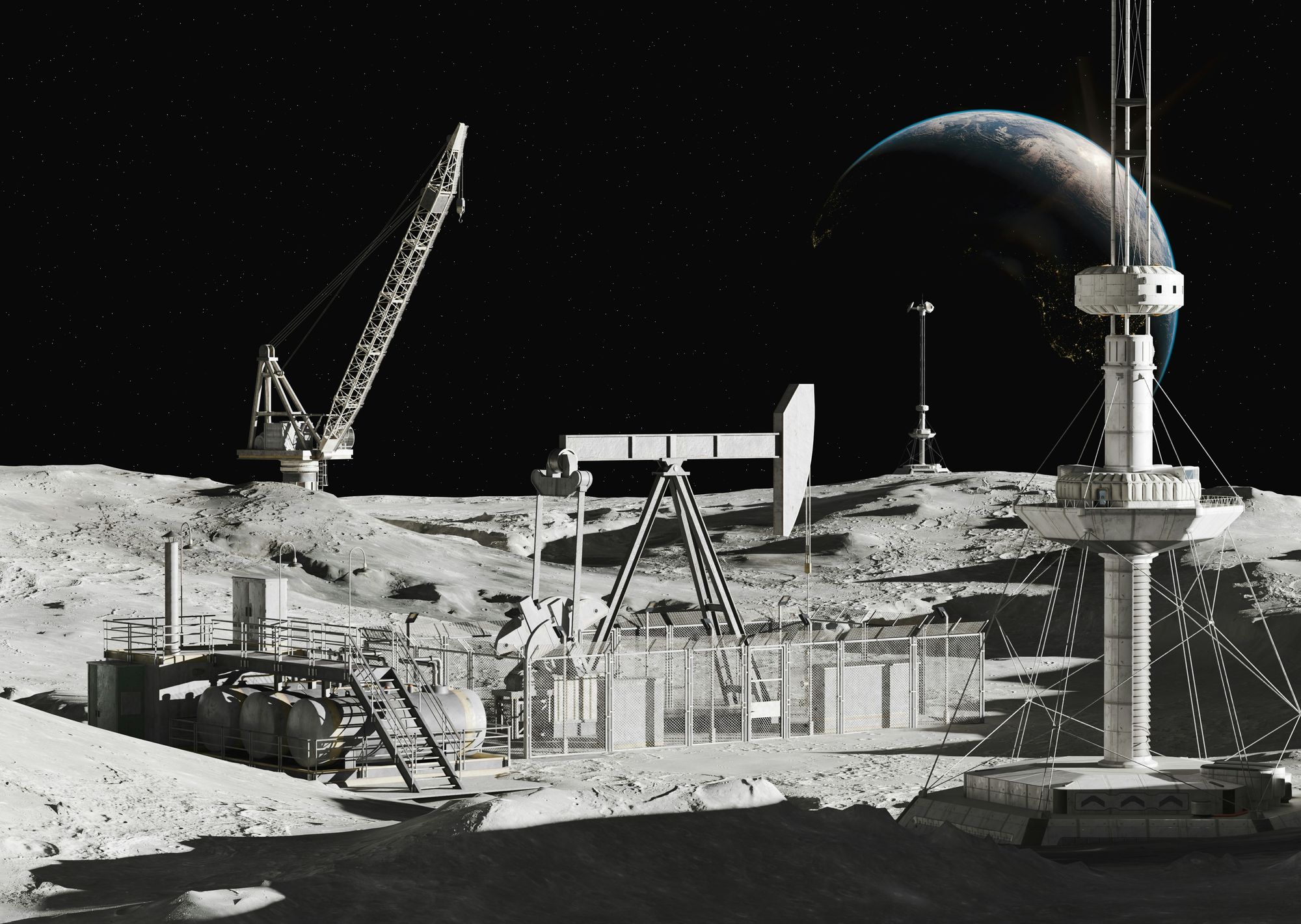
The Interlune-Vermeer partnership is significant on a dimension that extends beyond either company's immediate commercial interest: it establishes that an established terrestrial industrial manufacturer with decades of subsurface excavation engineering expertise has assessed the lunar construction market as sufficiently credible to commit engineering resources to purpose-built lunar machinery. This is a supply-chain validation that the commercial space resources narrative has needed since its articulation, investment theses around lunar helium-3, water-ice processing, and regolith-based construction have long referenced the requirement for autonomous excavation systems without a corresponding commitment from the industrial base that actually builds them. Vermeer's participation changes that, and it creates a template for subsequent partnerships between frontier-economy developers and terrestrial industrial companies whose excavation, materials-handling, and processing equipment constitutes the physical infrastructure layer without which no lunar resource programme can advance from concept to operation. The firm's framework treats this partnership as a supply-chain signal, not yet a validated commercial model, but a concrete demonstration that the industrial engineering required for lunar construction is being designed, not merely described.
Why terrestrial heavy industry is the critical missing link in the lunar economy
The commercial lunar economy has been articulated in investor narratives, government programme documents, and academic roadmaps for at least a decade, and the consistent gap between articulation and execution has not been primarily financial or regulatory, it has been physical. The specific machinery required to operate on the lunar surface: to excavate regolith at commercially relevant rates, to process it for resource extraction or construction-grade output, to transport material across the surface in the near-vacuum environment at one-sixth gravity and across temperature swings exceeding 300 degrees Celsius, has not existed, and the aerospace companies and space startups that have populated the commercial space resources sector have generally not had the deep mechanical engineering competency in excavation and materials-handling that would allow them to develop it efficiently. Terrestrial heavy-equipment manufacturers, the companies that have spent decades optimising drum cutters, bucket-wheel excavators, horizontal directional drilling systems, and conveyance mechanisms for specific soil conditions, material densities, and operating environments, represent an engineering base that is highly relevant to lunar construction but that has had no market-entry path into the space sector because no sufficiently credible commercial customer had emerged. The Interlune-Vermeer partnership represents the mechanism by which that gap is beginning to close: a commercial space resources company with specific extraction targets, a funded development programme, and an articulated deployment timeline provides Vermeer with a credible customer relationship that justifies committing engineering resources to the problem, while Interlune gains access to mechanical engineering expertise and manufacturing capability that would be prohibitively expensive and slow to develop internally. The structural implication of this mechanism, which the firm's framework expects to recur across additional partnerships between space resources developers and terrestrial industrials over the next five years, is that the supply chain for the lunar economy will be built primarily through partnerships and technology transfer from established terrestrial industries rather than through internal development within the space sector.
01 · The Interlune-Vermeer partnership, what each company brings and what the excavation system targets
Interlune contributes the mission architecture, the target application, the regulatory and commercial relationships with NASA and the Artemis supply chain, and the systems-integration responsibility for a lunar-deployable excavation platform; Vermeer contributes the mechanical engineering expertise in subsurface excavation, the manufacturing infrastructure, and the operational knowledge of how heavy machinery behaves in challenging ground conditions, together addressing the two halves of a problem that neither company could solve efficiently alone.
Interlune was founded by Rob Meyerson, who served as president of Blue Origin from 2003 to 2017, and Gary Lai, a Blue Origin veteran with experience in spacecraft systems engineering. The company's primary commercial mission is the extraction of helium-3 from the lunar regolith, the loose, unconsolidated surface material that covers the Moon to depths of several metres and that contains He-3 deposited by solar wind over geological time. He-3 is a stable, non-radioactive isotope of helium with a remarkably high commercial value density: on Earth, it is produced almost exclusively as a byproduct of tritium decay in nuclear weapons maintenance, and its supply is tightly controlled by governments, making it a scarce material whose price for specialised applications has historically been in a range of approximately several thousand dollars per litre in specialty gas markets, with fusion-research and quantum-computing applications potentially commanding significantly higher prices per unit of He-3 delivered. Interlune's thesis is that He-3 extracted from the lunar surface, processed to sufficient purity, and returned to Earth in a compact, high-value-density shipment can generate sufficient revenue to justify the capital cost of the extraction programme, a thesis that depends critically on three variables: the efficiency of the excavation and processing system, the cost per kilogram of lunar surface delivery and return, and the market price that He-3 commands as fusion-relevant isotope availability expands. Vermeer, founded in Pella, Iowa in 1948 by Gary Vermeer and now a substantial family-owned industrial manufacturer with multiple product lines in agriculture, tree care, underground construction, and surface excavation, brings to the partnership a specific competency in horizontal directional drilling and subsurface excavation that is directly relevant to the challenge of extracting material from the lunar regolith at controlled depths without the benefit of atmospheric pressure, conventional hydraulic systems calibrated for Earth conditions, or the normal forces that terrestrial gravity provides for standard excavation blade engagement. The autonomous excavation system that the partnership is developing is designed to operate without direct human operation from the lunar surface, a requirement that follows from both the practical impossibility of sustained human presence during early commercial operations and the approximately 1.3-second one-way signal delay from Earth that prevents real-time teleoperation from a human operator, requiring the system to execute excavation planning, obstacle avoidance, material transport, and cycle management through onboard autonomous control systems with Earth-based supervisory oversight at a level of abstraction that is qualitatively different from the direct-control paradigm of remote-operated construction equipment.
The partnership's significance is not primarily the specific excavation system it will produce, it is the template it establishes for how the lunar economy's physical infrastructure layer gets built. The answer, the firm's framework suggests, is not aerospace companies learning excavation engineering from scratch; it is terrestrial excavation companies learning lunar operating requirements with a credible commercial customer providing the mission context that makes the engineering investment legible.
02 · Lunar operating conditions, why autonomous excavation on the Moon is technically harder than on Earth
The lunar operating environment presents excavation engineering challenges that differ from terrestrial conditions not merely in degree but in kind, challenges that include the mechanical consequences of one-sixth gravity on cutting forces and material dynamics, the abrasive and electrostatically active properties of lunar regolith that accelerate wear rates beyond any terrestrial soil experience, the thermal environment that cycles across 300 degrees Celsius with no atmospheric buffering, and the vacuum condition that eliminates lubrication approaches and seal technologies that Earth-based heavy machinery relies upon.
The most fundamental engineering challenge is the interaction between lunar regolith and mechanical cutting or excavation surfaces. Lunar regolith, the unconsolidated material covering the Moon's surface, derived from billions of years of meteorite impact fracturing of the underlying basalt and anorthosite, has physical properties that have no precise terrestrial analogue. The particles are angular and glassy rather than rounded by the water and atmospheric weathering processes that smooth terrestrial soil particles, making regolith extraordinarily abrasive: lunar dust particle analysis from the Apollo samples found particles with sharp edges and a hardness comparable to glass, with particle sizes ranging from coarse gravel to sub-micron dust. Equipment operating in contact with this material faces wear rates that are scenario-based at approximately several times the wear rates of equivalent equipment operating in the most abrasive terrestrial conditions, such as silica mining or hard-rock tunnelling. The one-sixth gravity environment changes excavation mechanics in ways that Vermeer's terrestrial engineering experience requires re-calibration to address: in conventional excavation, the weight of the machine provides the reaction force that allows the cutting tool to engage material against soil resistance, and the normal force of the equipment on the ground provides traction for the drive system. At one-sixth gravity, both of these forces are reduced proportionally, requiring either a redesign of the cutting mechanism to generate the required forces through alternative means, greater bucket velocity, vibration-assisted cutting, drilling rather than scraping, or an increase in the equipment's mass to restore normal force, which directly increases the cost of lunar delivery and the power budget required to operate the heavier system. The vacuum condition eliminates several engineering assumptions that are standard in terrestrial heavy equipment: conventional lubricants evaporate or behave differently in near-vacuum, seals designed to prevent dust ingress in atmospheric conditions require redesign for lunar pressure differentials, hydraulic systems must accommodate the absence of atmospheric back-pressure in their fluid dynamics, and heat rejection, which on Earth occurs substantially through convection, must be accomplished entirely through radiation or conduction in the absence of an atmosphere. The autonomous operation requirement adds a systems-complexity layer that exceeds any existing terrestrial autonomous construction application: the system must perceive its environment (detecting regolith conditions, obstacles, and hazards), plan and execute excavation cycles, monitor its own health and adjust operations in response to wear or mechanical events, manage its energy budget across the lunar day-night cycle (approximately 29.5 Earth days), and communicate its status to Earth-based supervisors, all without the option of human intervention on a timescale shorter than the hours or days required for a physical service operation.
| Parameter | Terrestrial reference | Lunar condition | Engineering implication |
|---|---|---|---|
| Surface gravity | 9.81 m/s² | 1.62 m/s² (~1/6) | Reduced normal force; excavation tool engagement requires redesign |
| Atmosphere | 1 atm (nitrogen/oxygen) | ~10⁻¹² atm (vacuum) | No convective heat rejection; lubrication and seal system redesign required |
| Temperature range | ~–40°C to +50°C (typical) | –173°C to +127°C (surface) | Materials selection, thermal management, and electronics qualification constraints |
| Regolith abrasivity | Soil abrasion index: 50–200 (typical) | Glass-sharp particles; no water rounding | Wear rates scenario-based at several times terrestrial equivalents |
| Dust behaviour | Settles under gravity; water-suppressible | Electrostatically active; long-settling | Contamination of seals, optics, solar panels, and mechanisms |
| Teleoperation feasibility | Real-time (millisecond latency) | ~1.3 s one-way signal delay | Full autonomy required; no real-time human control in the loop |
03 · The helium-3 economics, value per kilogram versus the cost of lunar access
The commercial case for lunar helium-3 extraction rests on a value-per-kilogram calculation that is, in the firm's scenario-based framework, more tractable than most space resources economics, not because the numbers are comfortable, but because He-3's Earth-side supply constraint is structural rather than economic, creating a price floor that is not determined by production cost but by the scarcity of a material whose primary terrestrial source is a military weapons maintenance programme that has no commercial mandate to expand supply.
The terrestrial helium-3 supply is constrained by physics and policy in ways that make it qualitatively different from most commodity supply curves. He-3 on Earth is produced almost exclusively as a decay product of tritium, itself produced in nuclear reactors for weapons maintenance; the United States government programme, managed by the Department of Energy, produces a modest annual quantity that is allocated among national security, scientific research, and commercial applications in a system where demand has periodically exceeded supply, as occurred in the 2009-2012 period when a rapid expansion of neutron-detection requirements for homeland security applications created a documented He-3 shortage that drove prices to levels that prompted substantial investment in alternative neutron-detection technologies. The consequence of this supply structure is that the marginal price of He-3 is not set by the cost of producing the next unit, as in most commodity markets, but by the value of the next-best alternative for the application in question, which in the case of fusion research and quantum computing cooling is either a different isotope or a different technical approach, neither of which is a close substitute. Helium-3's fusion relevance is specific to the D-He3 fusion reaction, deuterium plus helium-3, which is theoretically attractive because it produces a proton and a helium-4 nucleus rather than the high-energy neutrons generated by the D-T (deuterium-tritium) reaction used in most current fusion research. The neutron-free or neutron-lean character of D-He3 fusion would make reactor shielding substantially simpler and eliminate much of the materials-activation problem that is a significant engineering challenge in D-T fusion development, potentially enabling smaller, simpler, and less expensive fusion reactor designs if the He-3 supply were available. The challenge is that D-He3 fusion requires higher plasma temperatures than D-T fusion, approximately 600 million degrees Celsius compared to approximately 100 million degrees for D-T, which means D-He3 fusion at commercial scale requires first solving the confinement problem that D-T fusion research is still working toward, creating a dependency chain in which He-3 supply expansion is only commercially compelling if D-He3 fusion development is advancing in parallel. The quantum computing and medical imaging applications of He-3 are more immediately commercial: He-3 dilution refrigerators are used to cool superconducting quantum processors to the millikelvin temperatures required for coherent qubit operation, and He-3 is used in medical MRI imaging enhancements and neutron detection instruments. These applications represent a more immediate market for He-3 supply expansion than fusion, with demand growing as quantum computing hardware scales and as MRI technology adoption expands in developing-market healthcare systems. The cost of lunar He-3 extraction at commercial scale involves three cost components that must be jointly optimised: the excavation and processing cost per tonne of regolith processed (which determines He-3 yield per unit of equipment operating cost), the cost of lunar delivery for the extraction equipment and energy systems (which is a function of launch cost per kilogram to the lunar surface and the mass of the system), and the cost of He-3 return from the lunar surface to Earth (which requires a lunar ascent vehicle capable of carrying a pressurised He-3 payload, adding a mission cost component that does not exist for lunar resource programmes that consume the resource in situ). In the firm's scenario-based framework, the extraction economics are sensitive to the assumed He-3 concentration in the target regolith deposit, which varies across the lunar surface and is highest at mid-latitudes where solar wind flux has been greatest, and to the efficiency of the thermal processing required to drive He-3 out of the regolith grains, which typically requires heating to approximately 700 degrees Celsius to achieve adequate He-3 release rates.
The He-3 economics are not built on a growth assumption, they are built on a scarcity floor. The terrestrial supply is structurally constrained by a government weapons programme that has no commercial mandate to expand, and the demand growth from quantum computing and fusion research is real and documented. The commercial question for Interlune is not whether He-3 will be valuable; it is whether the extraction, processing, and return system can be built at a cost that the value supports. That is an engineering problem, which is precisely what the Vermeer partnership is designed to address.
04 · The supply-chain thesis, terrestrial heavy industry as the strategic infrastructure of the space resources economy
The firm's framework for the commercial space resources economy identifies three supply-chain layers that are required for any resource extraction mission to advance from concept to operation: the access layer (launch and landing services, which commercial space has developed substantially), the extraction layer (the machinery that contacts and processes the resource, which the Interlune-Vermeer partnership represents), and the processing and return layer (the systems that refine the extracted material and return it to a commercial market on Earth or in space). The extraction layer has been the most structurally underdeveloped of the three, and the Interlune-Vermeer partnership is the most concrete commitment by a major terrestrial industrial company to filling that gap.
The pattern the partnership establishes has historical analogues in the early offshore oil and gas industry, where the development of subsea extraction technology required partnerships between energy companies with reservoir knowledge and commercial production targets and industrial equipment manufacturers with mechanical engineering expertise in pumps, drilling systems, and seafloor materials-handling, a supply chain that did not exist before offshore oil development created the commercial demand that justified its development, and that created an entire category of specialised marine and subsea equipment manufacturing that now constitutes a substantial segment of the global industrial equipment market. The lunar economy's extraction layer is at an analogous stage: the commercial demand signal exists in the form of funded space resources programmes, government lunar development commitments, and growing private investment in companies like Interlune, but the industrial manufacturing supply chain that will actually produce the excavation, processing, and materials-handling systems does not yet exist at scale. The Vermeer partnership is a first-mover positioning play in a supply-chain category where establishing the engineering capability and the customer relationship early creates competitive advantages that are, as in the offshore analogue, difficult to displace once operational systems are in service and the institutional knowledge of lunar operations has accumulated. The regulatory framework supporting lunar resource extraction has been in place in the United States since the 2015 Commercial Space Launch Competitiveness Act (the SPACE Act), which established that US citizens have the right to own and sell resources extracted from space bodies, a legal framework that does not assert US sovereignty over the Moon (consistent with the Outer Space Treaty) but that provides commercial certainty for resource extraction programmes sufficient to support private investment. The Artemis Accords, which the United States has negotiated with a growing list of partner nations, extend related principles to the international context. This regulatory foundation removes what had been a significant legal uncertainty for space resources investment, though it does not resolve questions about how conflicts between competing extraction claims would be adjudicated in the absence of a formal international resource-rights registry, a governance gap that will become commercially relevant as the number of funded lunar resource programmes increases. Vermeer's positioning in this supply chain differs from the aerospace contractor model in a strategically significant way: as a family-owned industrial manufacturer, Vermeer operates with a longer time horizon and a lower cost of capital for patient R&D investment than publicly traded aerospace and defence companies whose investor bases have quarterly earnings expectations. This ownership structure makes Vermeer a more credible long-term development partner for a frontier technology application than a public-company aerospace supplier would be, because the investment horizon required to develop lunar-qualified excavation machinery, which the firm estimates at approximately five to eight years from initial engineering to in-service hardware, extends well beyond the planning horizons that quarterly earnings guidance creates. The broader implication for the space resources investment thesis is that the most strategically relevant partnerships in the sector may be with family-owned or privately held industrials rather than with publicly traded aerospace primes, precisely because the patient capital structure aligns with the development timeline of frontier technology applications.
The near-term trajectory of the Interlune-Vermeer partnership is defined by the engineering and testing work required to develop a lunar-qualified excavation prototype that can be validated in terrestrial conditions before the 2028 pilot landing target. This involves two parallel workstreams: Vermeer's mechanical engineering work on the excavation mechanism, drive system, and structural design, adapting its subsurface excavation expertise to the specific constraints of lunar gravity, vacuum, and regolith properties, and Interlune's systems integration work on the autonomous control architecture, thermal management, and mission interface that transforms the excavation mechanism into a deployable lunar system. Terrestrial testing will use simulated lunar regolith (lunar regolith simulants such as JSC-1A and similar materials are available in commercial quantities) in vacuum chambers and reduced-gravity aircraft environments to validate performance predictions before the hardware is committed to a lunar mission. The 2028 target represents a hard constraint that will drive the engineering timeline and the capital requirements of both companies over the development period, and the outcome of the terrestrial validation programme, whether the excavation system achieves the required performance metrics in simulated lunar conditions, is the primary technical gate between the current development phase and the lunar mission commitment.
The longer-horizon significance of the partnership is its role in catalysing the supply-chain formation that the commercial lunar economy requires beyond the extraction layer. A successful Interlune pilot landing in 2028 that demonstrates excavation performance in actual lunar conditions would validate not only Interlune's specific programme but the broader proposition that terrestrial heavy-industry engineering can be adapted for lunar surface operations, a demonstration that would accelerate investment in the adjacent supply-chain categories (processing equipment, energy systems, materials conveyance, and surface infrastructure) that a scaled lunar resource economy requires. The He-3 market development trajectory over the same period, driven by quantum computing hardware scaling and fusion research progress, will determine whether the commercial demand for lunar He-3 is sufficient to support the investment in scaled extraction infrastructure that the Interlune programme would need to attract after the pilot phase. The firm's view is that the supply-chain formation and market development dynamics are more important to the long-horizon space resources investment thesis than the specific extraction technology, because the technology will be developed if the supply chain exists and the market is credible, while the technology alone cannot create either the supply chain or the market.
What the Interlune-Vermeer partnership changes in the commercial space resources investment framework
The commercial space resources investment thesis has required, for its validation, three things that have been articulated but not demonstrated: a credible resource target with a defined commercial market (helium-3, with its structural supply constraint and growing demand from quantum computing and fusion research, comes closer to this criterion than most space resources); a funded commercial developer with the mission architecture, regulatory relationships, and engineering programme to advance from concept to operation (Interlune's team, funding, and 2028 timeline place it in this category); and a supply chain of terrestrial manufacturers willing to commit engineering resources to the physical infrastructure of space resource extraction (the Vermeer partnership is the first substantial commitment of this kind from an established heavy-equipment company). The partnership's significance is that it provides the third element, not completely, and not at commercial scale, but at the critical threshold where a credible development programme exists and an industrial partner with relevant engineering competency is building the machinery.
The investment framework implication is that the Interlune-Vermeer collaboration represents a stage-gate passage in the commercial space resources development trajectory, from a phase where the thesis is supported by business plans, regulatory frameworks, and technology demonstrations to a phase where actual machinery is being engineered and tested by companies with the relevant technical depth to evaluate its feasibility honestly. This transition does not eliminate the substantial technical and commercial risks in the He-3 extraction programme, the lunar delivery cost curve, the regolith concentration variability, the return mission economics, and the fusion development timeline remain as genuine uncertainties in the commercial model, but it changes the character of the primary risk from 'is anyone actually building this' to 'does what is being built perform as required', which is a different and more tractable risk category for both investors and programme developers.
The most durable supply chains in frontier resource industries are not built by the resource companies, they are built by the equipment manufacturers who see the market clearly enough to commit before the revenue exists to justify it. Vermeer saw that moment in Iowa farm equipment in 1948. The question the Interlune partnership poses is whether it is seeing the same moment in lunar excavation in 2025, and whether being first to commit, in a supply-chain category that the lunar economy will eventually require regardless of which company wins the resource race, is the investment thesis that justifies a multi-year development programme in a market that does not yet exist at commercial scale.
Lunar excavation is a mining problem with a launch window attached. The firm follows the orbital side through live airspace and orbit tracking, and the extraction side in its geospatial intelligence workstation.
Sources: Interesting Engineering (interestingengineering.com), source article; Interlune published company communications and Series A funding disclosures; Vermeer Corporation published programme announcements; NASA Artemis programme documentation and Commercial Lunar Payload Services programme publications; US Department of Energy helium-3 production and allocation reports; National Academies of Sciences lunar resources science assessments; Apollo programme lunar sample analysis publications (NASA/Lunar and Planetary Institute); US Commercial Space Launch Competitiveness Act (SPACE Act, 2015) legislative text; Artemis Accords published text and signatory list; published research on D-He3 fusion reaction physics (MIT Plasma Science and Fusion Center, UK Atomic Energy Authority); quantum computing dilution refrigerator He-3 requirements literature. This note is for informational purposes only and does not constitute investment advice.