
The figures behind the proposal
SpaceX has proposed pairing an AI supercomputer with generation it would build and operate itself. That puts deliverable power, the scarcest input in AI computing, under the operator's control. The proposal leaves open whether the plant can be permitted, fueled and accepted locally on a schedule that beats the grid queue, and the December hearing covers incentives, while the air permit decides the plant.
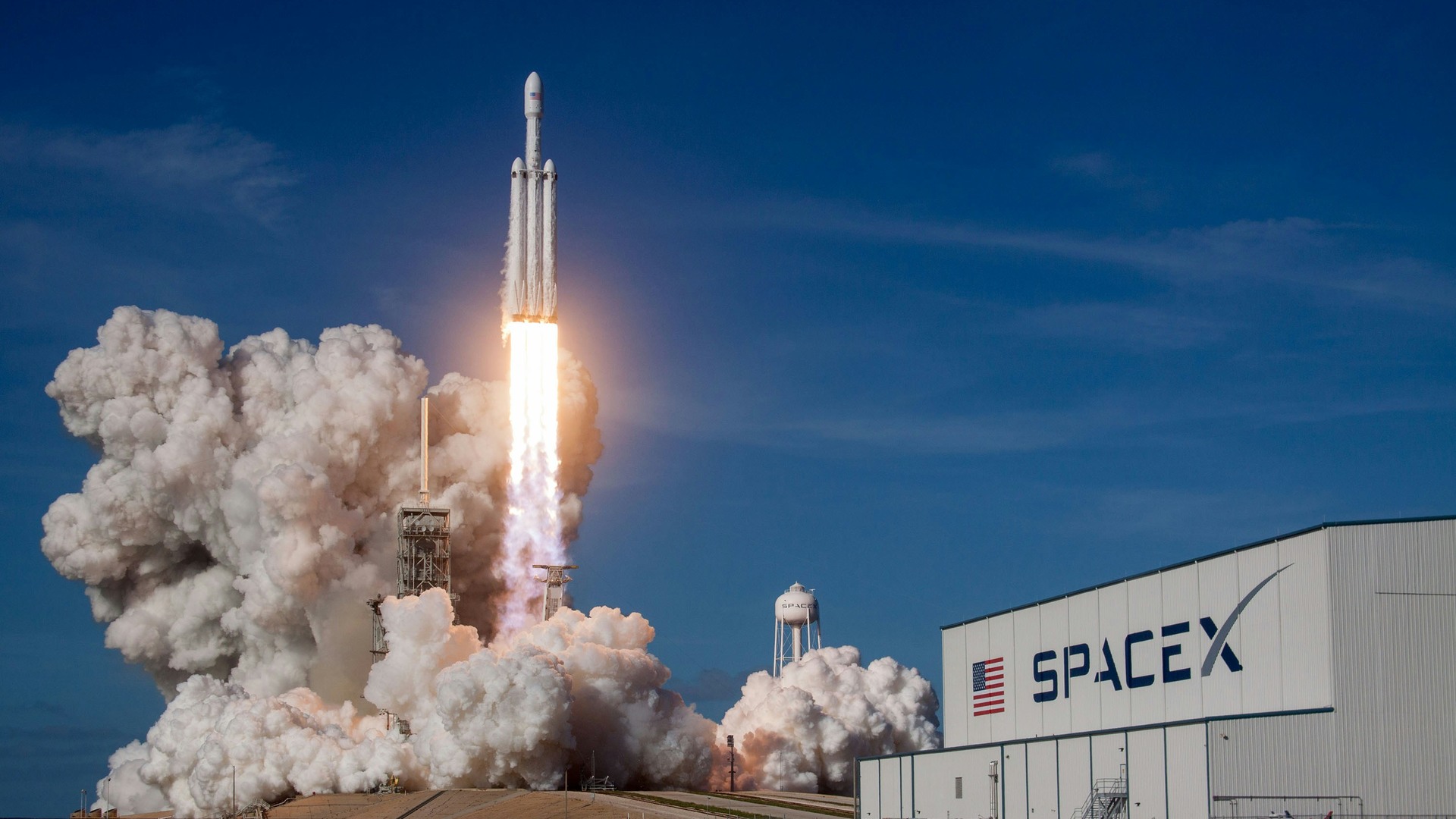
SpaceX has proposed a gas-fired power plant and a supercomputing campus at Starbase, Texas, on about 444 acres near the Port of Brownsville. The company would hold both assets end to end, from construction through operation. The city's hearing notice puts the initial phases at $24 billion and leaves room to expand. SpaceX has also applied to the Texas Commission on Environmental Quality for the air permit, which reporting on the filing describes as about 35 turbines producing roughly 750 megawatts.
What SpaceX has proposed
The proposal is a campus in two parts, computing and the power to run it, owned by one operator.
SpaceX says the computing capacity would serve work in medicine, emergency response, manufacturing and national security, and would help prove out technology for computing in orbit. Company figures point to over 3,000 building jobs and over 500 lasting positions. The land has a short history of its own: the city of Brownsville de-annexed the 444 acres in August 2026 as part of a water agreement with SpaceX, and the proposal followed.
Accounts of the air-permit filing differ on the final configuration. The initial layout is described as 35 turbines at about 748 megawatts, and one report describes a later swap to eight larger units totaling about 708 megawatts. Those figures come from the filing as reported, and the city's hearing notice does not state them.
Two separate processes apply. On 2026-12-09 the Starbase city commission takes up a tax abatement on the property and a related development agreement, and the notice leaves the size and length of the abatement undisclosed. The state environmental agency decides the air permit, which was still listed as pending as of 2026-11-12, according to reporting.
In AI infrastructure the scarce input is delivered power. A campus that generates its own has changed who sets its schedule.
Why build the power at the site
Deliverable power has become the binding constraint on AI computing, and the Texas grid queue is where that shows.
The Texas grid operator was tracking roughly 410 to 440 gigawatts of large-load requests by mid-2026, about 70 to 87 percent of them data centers, against a system whose available generation is around 100 gigawatts by one analysis. Most of those requests will never be built, but the process is being rebuilt around them: a rule proposed in March 2026 sets a 75-megawatt threshold for large loads, and on August 3 the governor directed state regulators to audit data centers moving through the queue. One forecast has more than 25 gigawatts of new industrial demand served by on-site generation by 2030, about 90 percent of it data centers.
Equipment is the second constraint. Large gas turbines from the main manufacturers are largely booked into 2029 and 2030, one maker's deliveries are reported as stretching to 2031, and one manufacturer's firm backlog plus slot reservations reached 116 gigawatts at the end of the second quarter of 2026. A fleet of 35 mobile units averaging about 21 megawatts each, on the firm's arithmetic, belongs to a different class of equipment, one that is typically available sooner and burns more fuel per unit of electricity.
Self-supply is not the same as leaving the grid. The grid operator's framework for co-located generation lets on-site output be netted against a limit on grid withdrawals, and it keeps new generators subject to the interconnection requirements. The reporting reviewed does not say whether the campus would keep a grid connection for backup.
What the plant's scale implies
A plant of this size is a large industrial gas customer and a large source of emissions, and simple arithmetic shows the scale.
At full output around the clock, 750 megawatts delivers about 18 gigawatt-hours a day, or roughly 6.6 terawatt-hours a year. Assuming a heat rate of 8,000 to 10,000 Btu per kilowatt-hour, a rough range for simple-cycle gas turbines, and about 1,037 Btu per cubic foot of gas, that burns about 140 to 175 million cubic feet a day. At a standard emission factor of about 53 kilograms of carbon dioxide per million Btu, it emits roughly 2.8 to 3.5 million tonnes a year. These are the firm's illustrative figures at full load, not filing values, and actual output will follow the computing load.
Spread over 750 megawatts, $24 billion is $32 million per megawatt of generation. The ratio suggests that the bulk of the outlay is computing hardware and facilities, with generation a minority share.
| Claim | On the record | Still open |
|---|---|---|
| A gas plant of about 750 MW | An air-permit filing as reported: 35 turbines at about 748 MW; a later layout of eight larger units at about 708 MW is described | The permit decision, the final configuration and the capacity factor |
| A $24 billion campus | The city's notice and company statements: initial phases, with room to expand | Computing capacity, phasing and funding |
| Power without the grid | The company says the campus would generate its own electricity | Whether a connection is kept, the co-location rules that apply and the fuel supply path |
| Local incentives | A hearing on 2026-12-09 covering a tax abatement on the property and a related development agreement | The size and length of the abatement, and whether the commission's action is final |
| Water | A Brownsville agreement worth up to $220 million, paid against milestones, for reuse and treatment projects | The campus's own water use; the city says no water rights are granted |
Water, permits and local consent
The schedule will be set by processes SpaceX does not control.
SpaceX describes a $220 million commitment to Brownsville's water and wastewater system. The agreement the city approved in August 2026 caps payments at that figure and releases them against milestones, beginning with a $40 million escrow deposit, and the city says it grants SpaceX no water rights or ownership stake. The projects, a potable reuse plant of about 8 million gallons a day and an expansion of the Southmost plant of about 10 million, work toward a 20-million-gallon target for a system that draws roughly 70 percent of its supply from the Rio Grande.
A hearing on a tax abatement decides a tax abatement. The air permit decides the plant.
Environmental groups have raised concerns about emissions from the plant, including methane, carbon dioxide and particulates, and a regional environmental justice network has announced a protest, while some residents have welcomed the jobs. Reporting also notes that the city commission voting on the incentives includes SpaceX executives, and accounts differ on whether its action on 2026-12-09 can be appealed.
What to watch
A short list of decisions and disclosures will say more about this proposal than the headline investment.
The air-permit decision and final turbine layout
Whether the state agency approves the registration as filed, and whether the 35-turbine layout or the larger-unit layout is built.
The fuel path
The pipeline and supply arrangement that would deliver, on the firm's arithmetic, 140 to 175 million cubic feet a day at full load.
Grid status
Whether the campus keeps a connection for backup and how it is classified under the grid operator's co-location framework.
The abatement terms
The size and length of the tax abatement once published, and whether the commission's vote is final.
Computing capacity in the first phase
How much compute the first phase holds, which turns 750 megawatts from a power figure into a capacity figure.
Conclusion
SpaceX's proposal is a clear case of an operator treating power as part of the product. Owning generation shortens the path to computing capacity on paper, and the grid queue and the turbine backlogs explain why the approach is spreading. The firm's view is that the schedule is the claim to watch: permits, fuel and local consent decide when 750 megawatts of generation becomes 750 megawatts of computing, and the December hearing addresses only the incentives.
Power is the product behind the product. The schedule belongs to whoever controls the permit, the fuel and the turbines.
Sources: City of Starbase public hearing notice; SpaceX statements; the Texas Commission on Environmental Quality air-permit filing (figures as reported in coverage of the filing); the City of Brownsville water agreement; ERCOT large-load reporting and rulemaking; US EPA emission factors; turbine manufacturers' backlog disclosures. Figures described as the firm's arithmetic are illustrative derivations from publicly reported values and are not forecasts. For informational purposes only; not investment advice.