The short answer
An offline internet is a stored, searchable copy of web content kept on servers inside your organization. When the connection is gone, people can still search it, open pages and read them as they would online. It cannot show what happened after the copy was taken, so it is refreshed on a regular cycle, but for the reference knowledge most work depends on, a recent copy is as good as the live web.
Paired with a private AI model, it becomes more than a library: the model can search the copy, read several sources, compare them and answer a question with references, all with no connection at all.
What an offline internet is
Three things are sometimes called an offline internet, and they differ a lot in scale:
- A cache keeps copies of pages people have already visited. It helps with a slow link but is useless for anything nobody looked at before the connection dropped.
- An offline library holds a fixed collection, such as an encyclopedia or a set of manuals. Valuable, but narrow.
- An offline web holds a broad, deliberately chosen copy of the open web, indexed so it can be searched like a search engine, and refreshed on a schedule.
The first two are workarounds. The third is what organizations mean when they plan for operating without a connection.
Where it matters
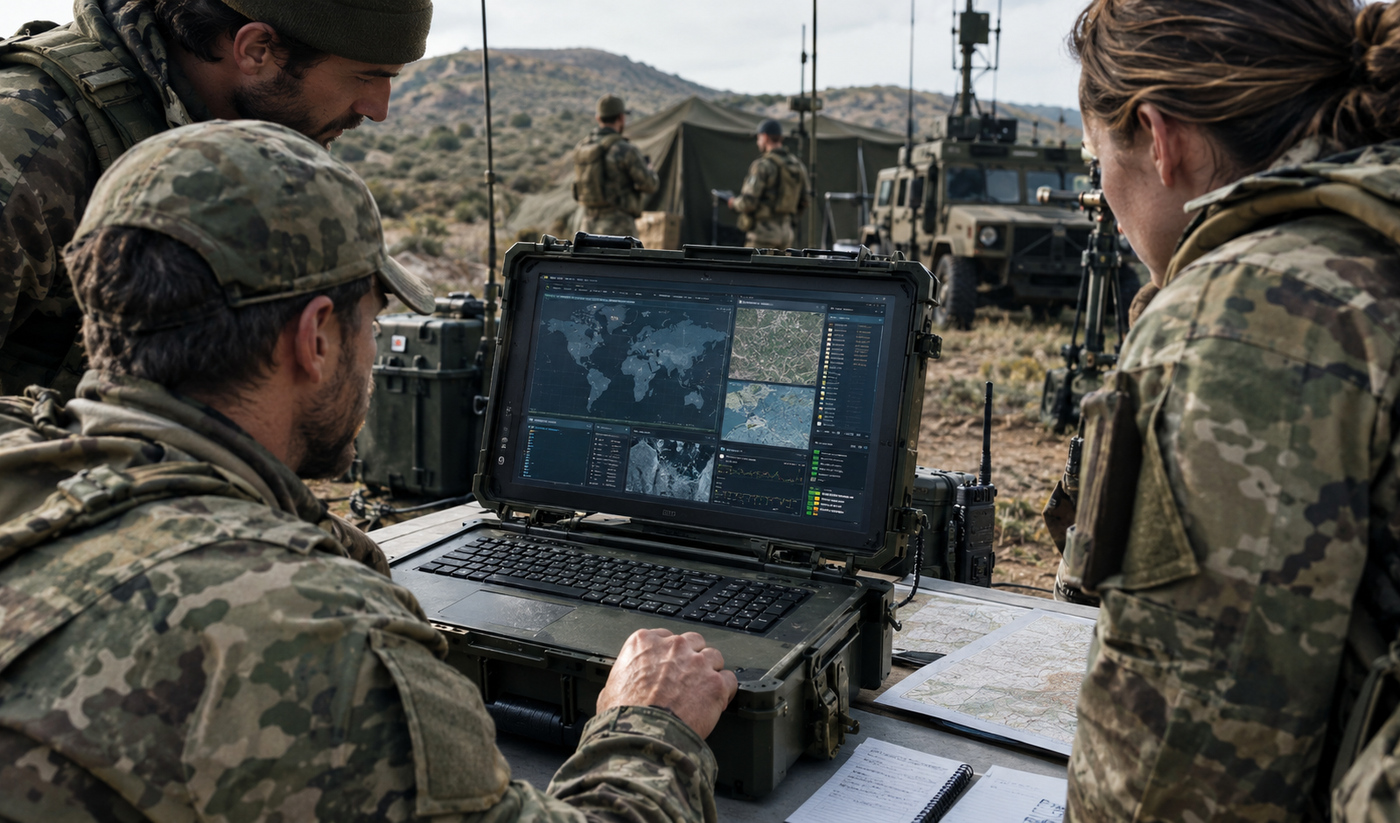
- Forward bases and field units, where links are intermittent, contested or deliberately switched off to avoid detection.
- Ships at sea and remote sites: offshore platforms, mines and research stations where bandwidth is scarce, expensive or absent for weeks.
- Secure rooms and isolated networks, where the rule is no outside line at all, yet analysts still need reference material.
- Outages and cyber incidents, when a regional failure or an attack takes the network down exactly when people most need information.
- Disaster response, where communication infrastructure is among the first things to fail.
The common thread is high stakes and no guarantee of a connection. In those settings, the team that still has the knowledge at hand is the team that keeps working.
What to keep
An offline web is a choice, not a mirror of everything. Start from the questions people actually ask when disconnected, then cover them:
- General reference: encyclopedic knowledge, dictionaries, geography, history.
- Technical documentation: equipment manuals, engineering references, software and system documentation.
- Standards and regulations that govern the work, including the versions in force.
- Science and medicine: open research literature and clinical references.
- The organization's own sources: procedures, reports and internal knowledge, kept alongside the web copy and searchable together with it.
Include content whose terms allow it to be stored and used internally: openly licensed material, public documentation and sources the organization licenses. Review those terms as part of setting up the collection.
How fresh it needs to be
Most reference knowledge changes slowly, so a copy a few weeks or months old serves most purposes. A few categories change fast and deserve priority on every refresh: regulations, security advisories, safety notices and anything tied to current operations.
- Date-stamp everything, so a reader always knows how old the copy is.
- Refresh on a fixed cycle, and carry the update in through the same controlled process used for software.
- Refresh before deployment: a ship or unit leaving for a long period should take the newest copy with it.
From search box to research assistant
Keyword search finds pages; people still have to read them. An AI model sitting on the same servers changes that. It can take a question, search the offline copy, read the most relevant sources, compare what they say and write an answer that cites the pages it used, so the reader can check it. It can also combine the web copy with internal documents in one answer: the manufacturer's manual and the unit's own maintenance log, the regulation and the firm's internal procedure.
This only works if the model also runs locally. An AI service reached over the internet is gone the moment the connection is.
Planning one
- List the disconnected situations you plan for and what people need to look up in each.
- Define the collection from that list, with an owner for each part.
- Size the storage. Text is compact; images, video and maps are not. Decide what media is worth carrying.
- Set the refresh cycle and the transfer procedure.
- Put it on the same secure servers as your private AI, so both work together with no connection.
- Rehearse a disconnection. Cut the link on purpose and let a team work through a real task.
How NOLAN does it
NOLAN: the offline internet inside lualdi.ai
NOLAN keeps a searchable copy of the open web on your own servers. lualdi.ai, the private AI running beside it, can look things up, read and compare sources at any moment, with no connection at all.
It brings the internet to places a connection cannot reach: a forward base, a ship at sea, a secure room with no outside line, or any site when the network goes down. NOLAN is powered by lualdi.ai: its private models read and search the offline web for your teams, on your own servers, with no outside service involved at any step.
In defense, units keep their knowledge when the line goes down. In finance, analysts keep researching behind the tightest security walls. In large enterprise, every site keeps working through outages.
Questions
Can you use the internet without a connection?
Not the live internet, but you can use a stored copy of it. An offline internet keeps a searchable copy of selected web content on local servers, so people can search and read it with no connection, up to the date the copy was taken.
How up to date is an offline internet?
As current as its last refresh. Most organizations refresh on a fixed cycle and prioritize fast-changing material such as regulations and security advisories. Every item should carry the date it was copied.
How much storage does an offline internet need?
It depends on scope and media. Text is compact and large reference collections fit on ordinary server storage; images, video and detailed maps take far more. Choose what to carry from the questions people will actually ask.
Can AI search an offline internet?
Yes, if the AI model also runs on local servers. It can search the copy, read and compare sources and answer with references, combining web content with internal documents, all without a connection.
What content can an offline internet include?
Content whose terms allow storage and internal use: openly licensed reference material, public documentation and sources the organization licenses, together with its own internal knowledge.