
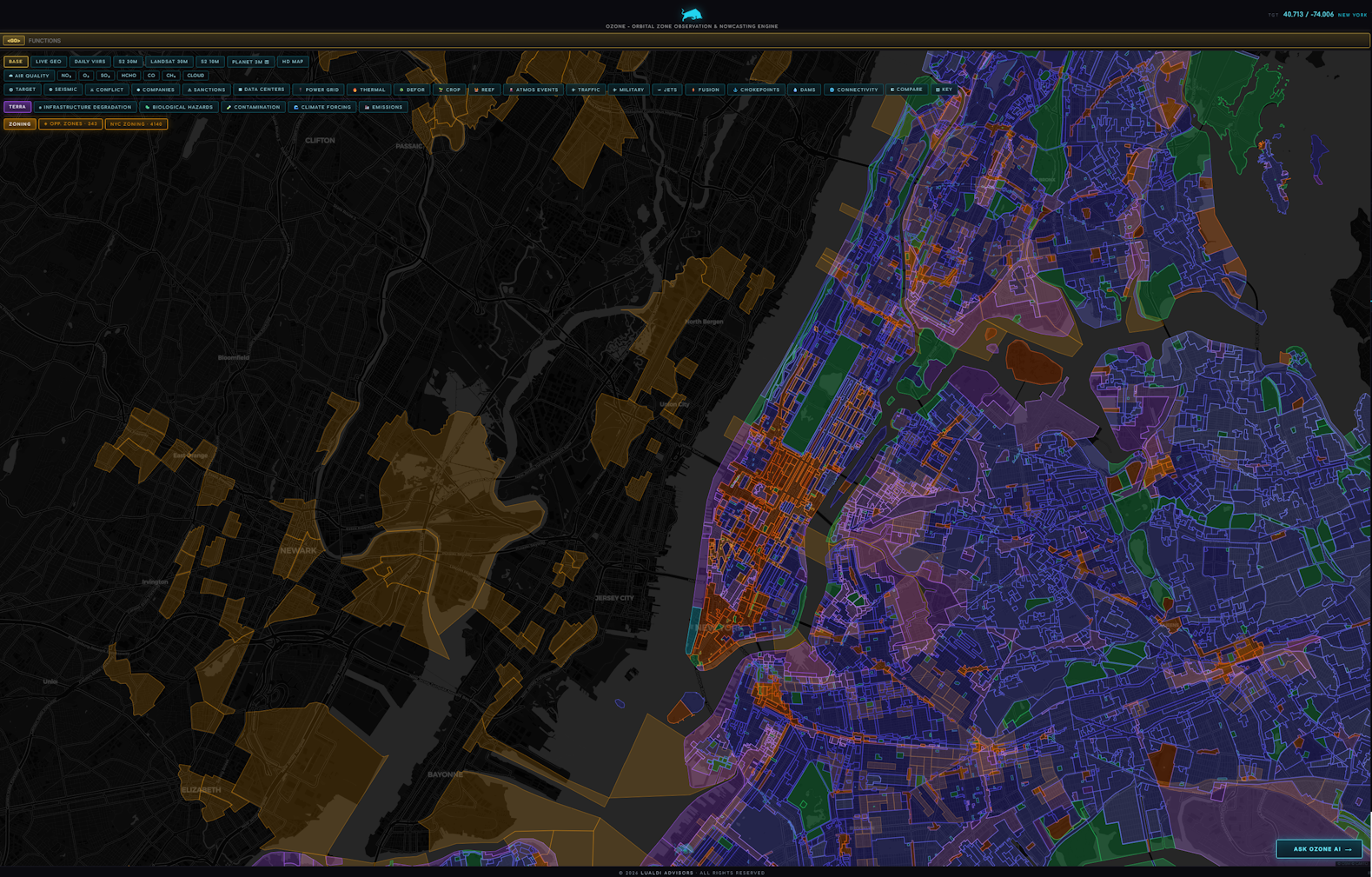
A rezoning from R-1 to mixed-use does not appear in any price feed. It appears in a planning-commission agenda — weeks or months before any transaction reflects it. OZONE's proprietary algorithms are built to detect exactly that change: reading administrative documents at national scale, identifying the patterns of regulatory activity that precede land-value inflection, and delivering a ranked, scored signal to the investment team — with the evidence chain attached — before the market has moved.
The release positions OZONE as the first platform in the Lualdi stack to address land-use intelligence directly — extending the firm's quantitative discipline into a domain where most institutional participants still rely on manual research, local broker networks, and lagged municipal publications to track the regulatory changes that drive land-value inflection.
The premise is structural rather than tactical. Zoning change is one of the most reliable leading indicators of land-value dislocation in the U.S. market, and one of the most systematically undermonitored, precisely because the signal lives in administrative documents that no price series ingests. OZONE's proprietary algorithms run continuously against that corpus — detecting change patterns, measuring regulatory velocity, and scoring each signal against historical inflection precedents — turning document-level data into a quantified, ranked analytical output that no conventional market-data subscription provides.
"Zoning changes are one of the most reliable leading indicators of land-value dislocation in the U.S. market — and one of the most systematically undermonitored. A rezoning from R-1 to mixed-use doesn't show up in any price feed. It shows up in a planning-commission agenda, weeks or months before any transaction reflects it. OZONE is built to read that signal before anyone else acts on it."
— Alex Lualdi - CEO, Lualdi Advisors
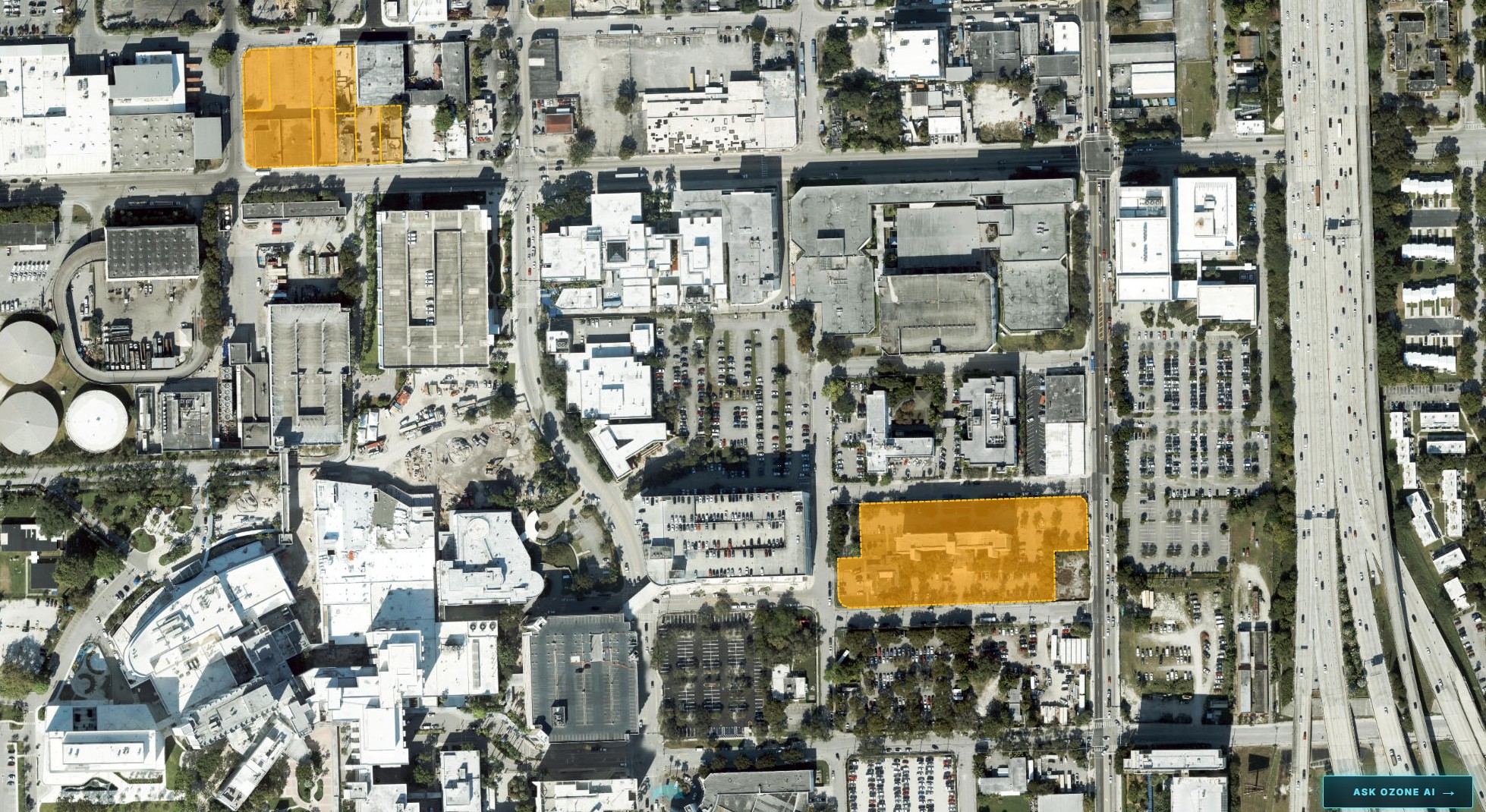
The zoning layer architecture
OZONE's new zoning infrastructure ingests and normalises land-use and zoning-classification data from municipalities, counties, and planning districts across the United States — a corpus spanning residential, commercial, industrial, agricultural, mixed-use, and overlay classifications across divergent local coding conventions.
The platform reconciles these into a standardised taxonomy, enabling cross-jurisdictional analysis that would otherwise require manual harmonisation across incompatible source formats. Four distinct layers are now available within OZONE's geospatial workspace.
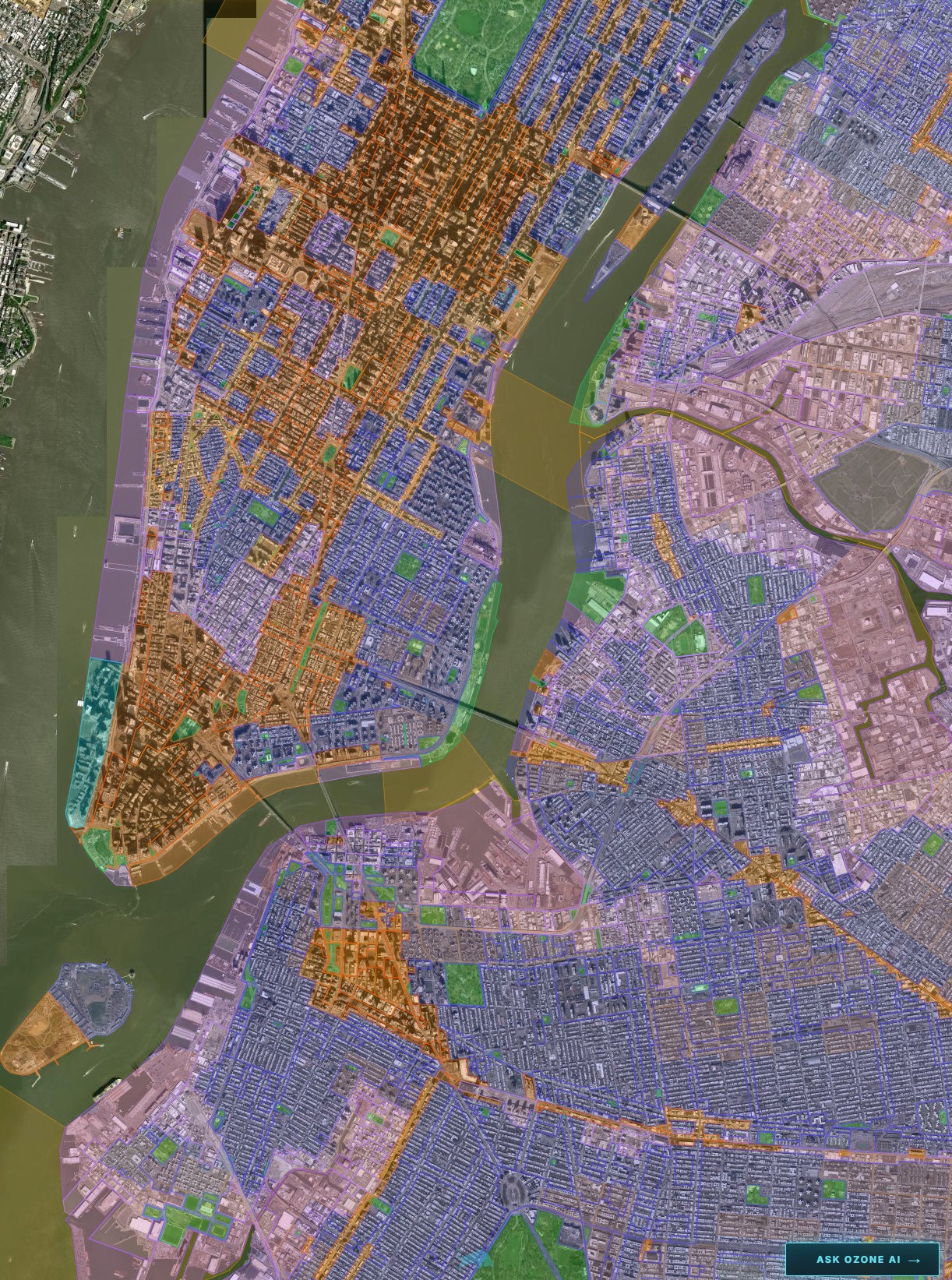
The Opportunity Layer
The Opportunity Layer is OZONE's proprietary analytical output layer — where raw zoning data becomes ranked investment signals. Proprietary algorithms run a continuous change-detection process across the zoning-history and pending-change layers, identifying patterns of regulatory activity that have historically preceded land-value inflection in comparable markets and jurisdictions. Four categories of zoning-change signal feed the model.
Upzoning clusters
Concentrations of density increases — R-1 to R-3, single-family to mixed-use, industrial to residential — within a defined radius and time window. They signal municipal intent to accommodate growth in a corridor before any infrastructure or transaction makes that intent visible in price data.
Overlay-zone introductions
New overlay designations — transit-oriented development, affordable-housing, historic-preservation, and flood-hazard overlays — that alter development economics without changing a parcel's base classification. These are among the most frequently missed signals in institutional research.
Variance-approval velocity
Changes in the rate at which a planning commission approves variance applications in a district — a leading indicator of shifting permissiveness that often precedes formal rezoning by a significant interval. A district approving variances at an elevated rate relative to its own history is statistically more likely to rezone in the near term.
General-plan amendment alignment
Cross-referencing active parcel zoning against the municipality's most recent General or Comprehensive Plan. Parcels zoned below their plan designation are a structural opportunity: the municipality has formally declared intent to allow higher-value use, but the zoning has not yet caught up.
Opportunity Layer signals are scored and delivered as a ranked list of parcels, districts, or corridors — filterable by signal type, state, metro area, asset class, and score threshold. Each signal carries a cited evidence chain: the specific planning documents, commission minutes, or regulatory filings that produced the score, so investment teams exercise their own judgement on the underlying source material rather than acting on a black-box output.
"We are not in the business of telling clients what to buy. We are in the business of making sure that when they make a decision, they are making it with a more complete picture of the regulatory environment than the person on the other side of the transaction."
— Alex Lualdi - CEO, Lualdi Advisors
Coverage and availability
The zoning layer and Opportunity Layer are available across U.S. jurisdictions, with parcel-level resolution in major metropolitan areas. Coverage in smaller municipalities and rural counties is at the county and district level, with parcel-level resolution added on a rolling basis as municipal data availability permits.
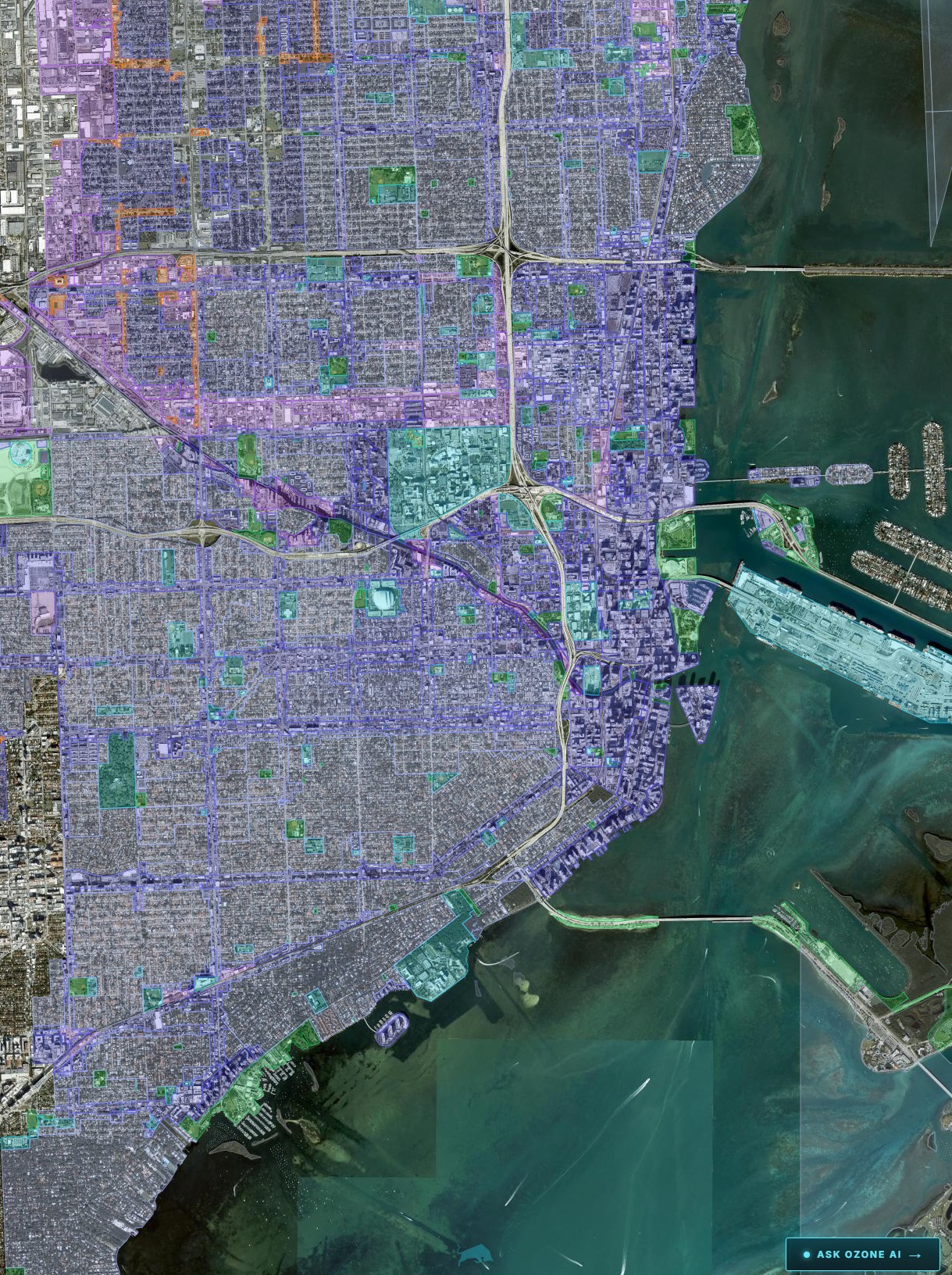
OZONE's zoning layers and the Opportunity Layer are available immediately to existing OZONE clients as part of the standard platform subscription. New institutional clients may request a scoped proof-of-value engagement covering a defined geography and asset class through their Lualdi Advisors relationship contact.
The firm's view is that the most valuable land-use intelligence is not the most comprehensive map — it is the earliest defensible signal. The underlying data — planning-commission agendas, variance filings, municipal records — is technically public. What OZONE's proprietary algorithms do is read it at scale, identify the patterns that have historically preceded land-value inflection, score each signal against that evidence base, and deliver the result to the investment team ranked and cited — before any of it reaches a price feed. By the time a rezoning shows up in transaction data, the dislocation has already been priced. OZONE is built to read the agenda, not the aftermath.
Sources: Lualdi Advisors OZONE product documentation (lualdiadvisors.com/ozone). Coverage figures reflect launch scope and do not represent guaranteed outcomes for any engagement. This note is for informational purposes only and does not constitute investment advice. The specific signal methodology is proprietary.