
The story in four numbers
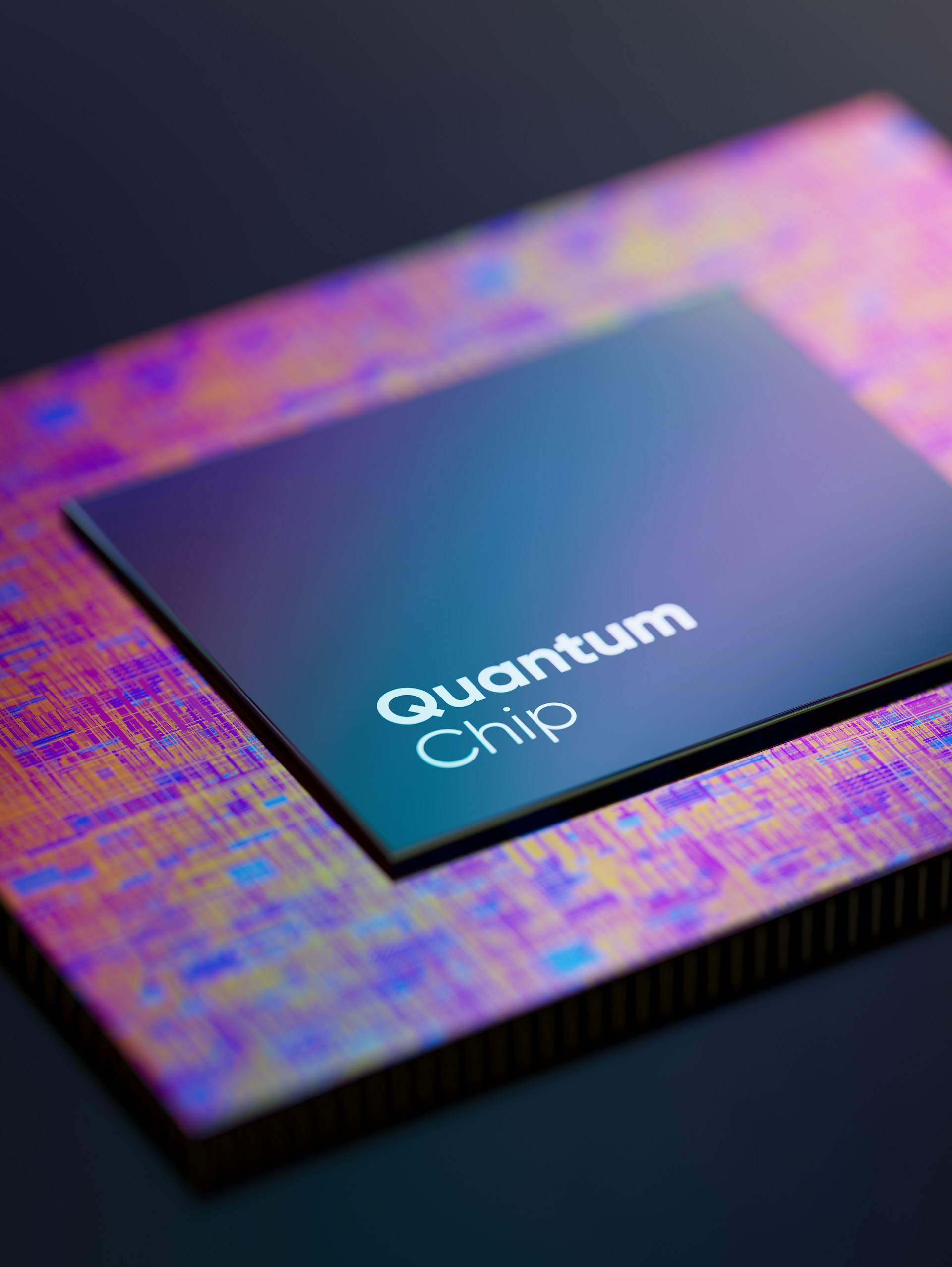
Britain's commitment of £1.1 billion to national AI supercomputing infrastructure and domestic chip development is a strategically coherent programme that correctly identifies the two dimensions of sovereign compute, facility access and silicon capability, and invests in both at a scale meaningful for the UK research and industrial ecosystem. The firm reads it as an investment that will close a documented and specific bottleneck in the near term, extend the UK's chip design position over a longer horizon, and leave entirely unresolved the dependency on East Asian fabrication that defines every sovereign compute strategy in the world outside of three or four economies that operate advanced logic fabs at the frontier. What it cannot be asked to do, and the risk is that political framing will invite precisely this expectation, is place the UK on competitive terms with the United States, the European Union, or Japan on the fabrication dimension. That would require an order of magnitude more capital, a decade of construction lead time, and a strategic bet on domestic semiconductor manufacturing that the UK's own published strategy has explicitly declined to make.
Why sovereign compute became a strategic imperative
The concept of sovereign compute hardened over the past three years from a theoretical preference expressed in research policy documents to an operational imperative embedded in the budgetary planning of every major technology-competitive economy. Three dynamics drove this shift simultaneously. First, the emergence of large language models and frontier AI systems with compute requirements, measured in tens of thousands of high-end accelerators running for months on a single training run, that no private research institution can independently sustain without cloud pricing that makes sustained large-scale AI research unaffordable for academic groups. Second, the growing operational clarity that the chips on which those systems run are manufactured in a geographic region whose political stability and supply chain continuity are not guaranteed by any security architecture that currently protects them. Third, the demonstrated willingness of the US government, through both the CHIPS and Science Act and a tightening regime of export controls on advanced AI chips, to treat semiconductor technology as a direct instrument of geopolitical leverage, a position that made every non-US sovereign AI strategy dependent on continued US export permission for the hardware it required. For the United Kingdom, a country that is a globally significant producer of chip design intellectual property, a significant consumer of AI research and development services, and a country that does not fabricate any advanced logic semiconductors on its own territory, these three dynamics converge on a single policy conclusion: that the absence of sovereign compute capability is not an economic inefficiency but a structural vulnerability. The £1.1 billion announced by the government is the first large-scale attempt to address that vulnerability at the infrastructure level, and the structure of the two-strand programme reflects both the ambition and the honest constraints of the task.
01 · What the two-strand programme covers
The announced commitment divides into two distinct strands with different investment logics, different time horizons, and different definitions of what success looks like, and conflating them produces a misread of both what has been funded and what has not.
The first strand, the national AI supercomputer, is fundamentally a procurement and infrastructure operation: acquiring and operating a large-scale GPU cluster accessible to UK researchers, universities, and AI companies at a cost basis and access priority that commercial cloud pricing cannot replicate for sustained large-scale training and evaluation workloads. A facility of this type, funded at a scale implied by the larger portion of the £1.1 billion envelope, could support tens of thousands of high-end AI accelerator units. In the documented cost range of large national compute facilities, allocating approximately £400 to £600 million toward hardware, facility construction, power infrastructure, and networking would support a system competitive with, though not equal to, the frontier compute facilities being constructed in the United States under the AI infrastructure buildout underway since 2024. The operational significance of such a facility for the UK research community is not primarily about raw throughput but about access: the absence of a nationally accessible high-performance AI compute facility has been a documented constraint on the UK's ability to attract and retain AI research talent, to compete for large-scale government AI contracts, and to provide UK universities the compute allocation required to train and evaluate next-generation models without dependence on commercial cloud allocation that is ultimately governed by American corporate pricing decisions. The second strand, domestic chip development, operates on a longer horizon and a different logic entirely. It is not an attempt to replicate TSMC or Samsung on British soil; the UK's own semiconductor strategy, published in 2023, explicitly declined to position the country as a future advanced fab economy, citing the capital requirements and lead times involved. It is instead an effort to expand the depth and commercial viability of the UK's chip design ecosystem, its compound semiconductor manufacturing capability in materials such as gallium nitride, silicon carbide, and indium phosphide, and the research infrastructure that connects university IP generation to commercial product development in the sectors, defence, 5G infrastructure, power electronics, photonics, where British design capability is strongest.
The two strands of the programme are not symmetric in what they buy or when they deliver. The supercomputer strand closes a near-term operational gap with known capital. The chip development strand plants seeds in an industrial ecosystem whose harvest horizon is measured in decades, not budget cycles, and that asymmetry must be carried explicitly into any honest assessment of the programme's returns.
02 · Sovereign infrastructure vs. sovereign silicon
The distinction that most precisely defines what £1.1 billion can and cannot deliver is the one between sovereign infrastructure and sovereign silicon, and it is a distinction the programme navigates carefully but cannot dissolve, because the physics and economics of advanced semiconductor fabrication have resolved it long before this budget line was written.
A national AI supercomputer is sovereign infrastructure in a meaningful operational sense: the UK government owns or controls the facility, determines who has access and at what priority, and is not subject to the pricing decisions, export control constraints, or commercial terms of a private cloud provider. The allocation of compute time to UK universities, NHS research programmes, defence AI projects, and early-stage AI companies can be managed as a matter of national policy rather than commercial negotiation. But the chips that fill that facility will almost certainly be designed in the United States, at NVIDIA, AMD, or Intel, and fabricated in Taiwan by TSMC or in South Korea by Samsung. The facility is sovereign; the silicon is not. This is not a criticism particular to the UK programme. It is the starting condition of every sovereign compute investment made by any country outside the three or four economies that operate advanced logic fabs at the frontier process node. The US CHIPS Act includes an explicit domestic fabrication strand precisely because US policymakers recognised, after decades of offshore fab migration, that controlling the software stack and the cloud infrastructure is insufficient sovereignty if the underlying hardware is subject to a single-point geographic dependency in a region of documented geopolitical risk. The EU Chips Act makes the identical argument for Europe. Japan has rebuilt its entire semiconductor industrial policy around the same recognition. The UK's programme, by contrast, has explicitly declined to pursue advanced fab re-shoring, accepting that the capital requirements and lead times involved are beyond the reach of a national programme at any plausible UK budget scale. The chip development strand addresses the design and compound semiconductor layers of the stack, dimensions where the UK has genuine and defensible capability, while leaving the advanced logic fabrication dependency structurally intact.
| Economy | Programme | Commitment (approx.) | Primary focus | Advanced fab component |
|---|---|---|---|---|
| United States | CHIPS and Science Act | $52.7B | Advanced logic + memory fab + R&D + workforce | Yes (Intel Ohio, TSMC Arizona, Samsung Texas) |
| European Union | EU Chips Act | EUR 43B | Advanced fabs, design clusters, R&D ecosystem | Yes (TSMC Dresden, Intel Germany, execution delayed) |
| Japan | METI Semiconductor Programme | ~$26B equiv. | TSMC Kumamoto facility, Rapidus 2nm domestic target | Yes (TSMC Japan operational, Rapidus in development) |
| India | India Semiconductor Mission | ~$10B | Assembly, test, design ecosystem, Tata fab | Limited (ATMP-focused; Tata fab at mature nodes) |
| United Kingdom | AI Compute + Chip Programme | £1.1B (~$1.47B) | National AI supercomputer + chip design ecosystem | No (design and compound semiconductor focus) |
03 · The global race and where £1.1B sits within it
Calibrating the UK commitment against the global landscape of sovereign semiconductor investment requires holding two frames simultaneously: the absolute capital scale comparison, which is unflattering, and the strategic position comparison, which is more defensible, because the UK is not competing in the same category as the United States or the European Union on the fabrication dimension.
The comparison table establishes the arithmetic clearly. The US CHIPS Act at $52.7 billion is approximately 36 times the UK's announced figure in absolute terms; adjusted for GDP, the ratio narrows but remains substantial. The EU Chips Act at EUR 43 billion is similarly in a different order of magnitude. Japan, despite a significantly smaller economy than the EU or the US, has committed what amounts to approximately $26 billion equivalent, driven by the political priority placed on the TSMC Kumamoto facility and the Rapidus 2-nanometre national champion initiative, the latter of which aims to establish a domestic leading-edge logic fab by the late 2020s. Against this backdrop, the honest framing of the UK's £1.1 billion is this: it is not a bid to compete for advanced fab re-shoring, because the UK strategy has explicitly and, in the firm's assessment, correctly concluded that that competition cannot be won at any UK-sustainable capital level; it is a bid to strengthen the specific dimensions of the AI hardware value chain where UK competitive position is already established and defensible. Those dimensions are, first, chip design IP and architectural innovation, the legacy of Arm, the current output of UK universities and deep-tech startups, and the emerging sector of AI accelerator design companies in Cambridge, Bristol, and Edinburgh, and second, compound semiconductor manufacturing capability in the materials and process nodes relevant to defence electronics, power conversion, and next-generation communications infrastructure. Neither of these domains requires a leading-edge logic fab. Both require sustained R&D investment, talent pipelines anchored to university-industry partnerships, and the kind of long-dated institutional commitment that a £1.1 billion programme with a multi-year disbursement profile can credibly provide. The risk the UK carries is not that the strategy is wrong about what it is doing but that it will be evaluated, politically and commercially, against the headline capital figures of the US, EU, and Japan, and found insufficient on a comparison that was never the right frame for what the programme was designed to achieve.
04 · The Arm paradox and the design-without-fab model
No analysis of UK chip strategy is complete without engaging the Arm question, and the question is genuinely paradoxical in ways that the programme's design-focused positioning does not fully acknowledge.
Arm Holdings, headquartered in Cambridge, is the single most consequential British semiconductor company in history and one of the most consequential in the world. Its processor architecture powers more than 95% of the world's smartphones, a growing share of data centre chips, and an increasing proportion of the AI accelerator designs that will define the next decade of compute infrastructure, including, in the form of Arm-based CPU clusters paired with discrete GPU accelerators, the likely architecture of the national supercomputer the UK programme intends to fund. It was founded in Cambridge in 1990 as a joint venture between Acorn Computers and Apple, structured from inception as a pure licensing business, design the architecture, license the IP, never build a fab, and that structural choice, design and license rather than manufacture, is precisely the model that the UK's sovereign chip strategy now explicitly endorses as the appropriate framework for a country of its industrial scale, capital depth, and manufacturing heritage. The paradox is this: Arm is owned by SoftBank, a Japanese conglomerate, having been acquired in 2016 for $32 billion and then partially floated in a 2023 Nasdaq IPO that valued the company at approximately $60 billion. Its most important commercial relationships are with Apple, Qualcomm, Samsung, MediaTek, and NVIDIA, none of them British. The UK's greatest chip success is neither British-owned nor under any framework of British strategic control, and its IP flows through a global licensing and manufacturing ecosystem in which UK national interest is one factor among many. The design-without-fab model that Arm perfected, and that the UK's chip strategy commends as the national competitive model, is intellectually correct as a description of where UK comparative advantage lies. What it elides is the ownership and strategic control dimension: in a world where governments increasingly treat semiconductor IP as an instrument of geopolitical leverage, design capability held by foreign-owned companies, however British in its engineering heritage, does not constitute sovereign capability in the fullest sense. The programme's chip development strand invests in deepening UK-based design capability in a way that could, over a decade or more, build the domestic IP ownership base that would give the design-without-fab model genuine sovereign content. Whether the disbursement horizon and capital scale of the programme are commensurate with that ambition is the question the firm cannot fully resolve from the announced parameters.
Arm's lesson for the UK is not that design beats fabrication as a national technology strategy. It is that a country which controls the architectural standard for a generation of computing devices can extract outsized value from the entire manufacturing value chain without owning a single wafer. The new programme inherits that lesson. What it must also inherit is the recognition that Arm's sovereignty, once SoftBank acquired it, was demonstrated to be incomplete at exactly the moment that semiconductor IP became geopolitically consequential.
The most direct near-term consequence of the announced programme is the material improvement of compute access for the UK research and AI development community. The existing National AI Research Resource has operated under documented capacity constraints relative to the demand generated by the UK's university and research sector, and the funded expansion represents a substantial increase in accessible AI compute. The practical effect, measured in training runs completed, model evaluations performed, and research projects unblocked, will be visible within two to three years of the facility reaching operational capacity. The firm expects UK AI research output metrics, including peer-reviewed publications, model benchmarks, and commercial spin-out rates from compute-intensive research, to improve measurably against the pre-investment baseline as the compute constraint eases and the research community gains sustained access to the infrastructure scale that international competitors have operated for several years.
The chip development strand of the programme operates on a time horizon that extends well beyond the electoral cycle within which the investment will be politically evaluated. Compound semiconductor clusters in Cardiff and Bristol, chip design IP programmes at Cambridge and Edinburgh, and the talent pipelines that connect university research to commercial semiconductor engineering represent long-dated investments whose compound returns depend on sustained institutional commitment, the kind that is historically difficult to maintain across changes of government, budgetary cycles, and the shifting prioritisation of industrial policy. The UK semiconductor strategy's 10-year commitment framing is deliberately long-dated for this reason. The risk is not that the investment thesis is wrong but that the patience required to execute it will be eroded by the pressure to show near-term returns on a capital base that does not, by its nature, produce them in the timeframes that political accountability demands.
The incomplete wager and the long game
The UK's £1.1 billion commitment to national AI supercomputing and domestic chip development will be assessed, in the near term, against two questions: does the national supercomputer close the compute access gap that has constrained UK AI research, and does the chip development funding produce measurable expansion of the UK's design IP base and compound semiconductor manufacturing position? The firm's assessment is that the programme is well-structured to answer both questions affirmatively, within the limits of what the capital and the time horizon allow. The national supercomputer, if procured and operated with the institutional discipline that large national compute facilities require, will demonstrably improve UK AI research capability. The chip development strand, if disbursed through the university-industry partnerships and design ecosystem support mechanisms that have historically worked in the UK context, the Catapult network, the Faraday Institution model, the university deep-tech spinout pipeline, will extend a chip design capability that is already among the strongest in the world.
What the programme cannot be asked to do, and what the political communication around it must be careful not to imply, is close the fabrication gap with the United States, European Union, or Japan. The UK's semiconductor strategy made an explicit and defensible choice to compete on design and IP rather than fab, and the £1.1 billion is an investment in that chosen lane, not a departure from it. The risk is the framing risk: a programme described as a sovereign compute and chips initiative will be evaluated by some observers against the CHIPS Act comparison and found wanting by a factor of 36. That comparison is not the right frame for what the programme was designed to achieve, but managing the expectations that a £1.1 billion announcement naturally generates, expectations of competitive parity with programmes an order of magnitude larger, is as much a communication challenge as a policy one. The wager is incomplete in the specific sense that it addresses the infrastructure and design dimensions of sovereign compute but accepts the fabrication dependency as a structural given. That acceptance is honest and probably correct, given the alternatives available to a country of the UK's size. But honesty about what the wager cannot win is the condition on which the analysis of what it can win should be conducted.
The firm reads the UK's £1.1 billion commitment as a well-structured investment in the two dimensions of sovereign compute where British capability is documented and defensible, facility infrastructure and chip design IP, and as an honest acceptance, implicit in the programme's architecture, that the fabrication dependency will not be resolved at any capital scale the UK can sustain. Operators and investors assessing the announcement should hold both facts simultaneously: the near-term compute access gain is real and the design ecosystem investment is strategically coherent, and the national AI supercomputer will still be running chips designed in California and fabricated in Taiwan on the day it opens.
Sources: UK Government AI Opportunities Action Plan (January 2025); UK Semiconductor Strategy (November 2023); US CHIPS and Science Act public documentation (2022); EU Chips Act regulatory text (2023); METI Japan semiconductor programme public disclosures; Arm Holdings corporate filings and IPO documentation (2023); published AI compute economics research; UK Research and Innovation (UKRI) National AI Research Resource programme documentation. This note is for informational purposes only and does not constitute investment advice.