
The story in four numbers
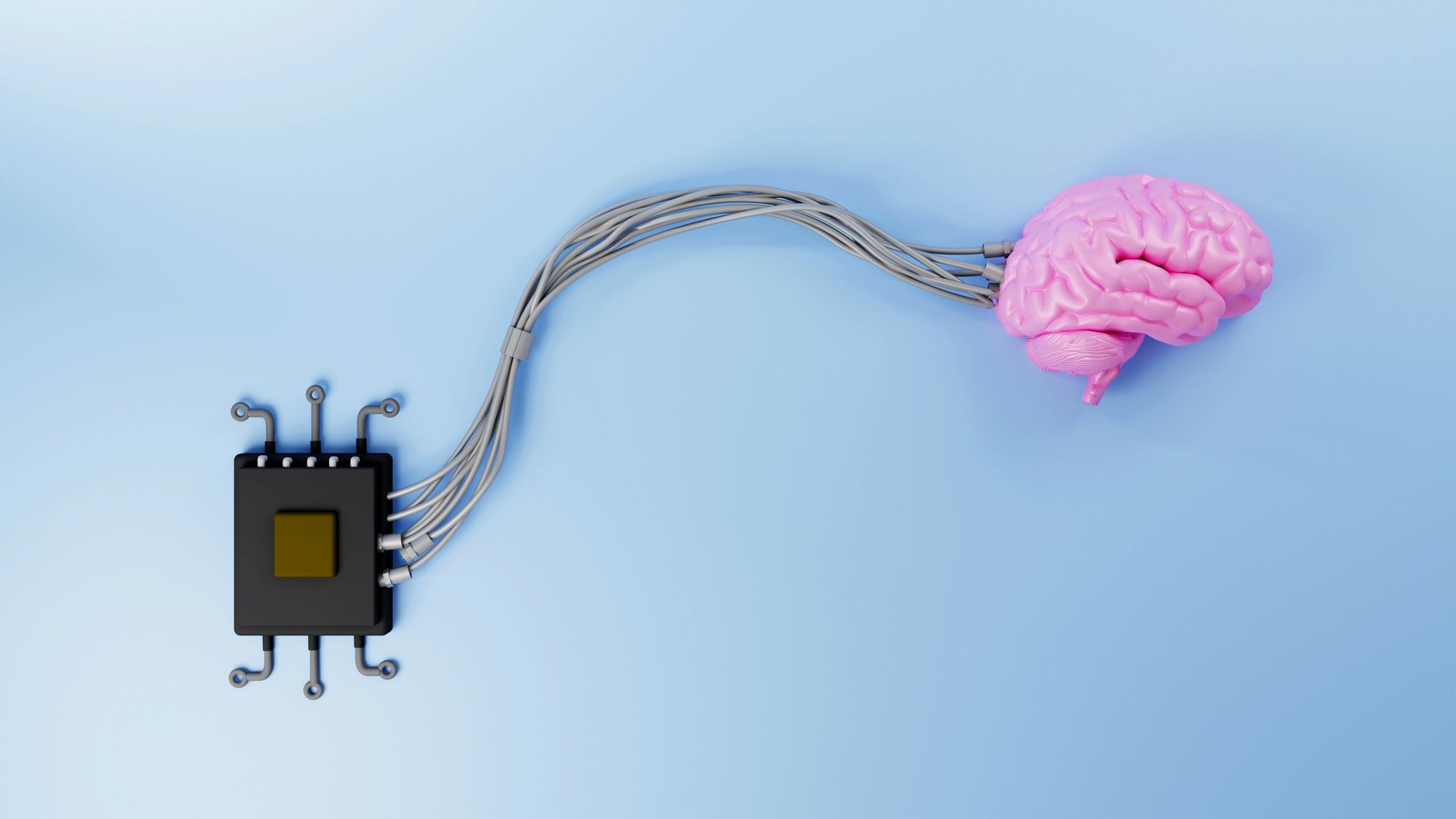
BrainCo's humanoid robot brain interface demonstration is significant as a proof-of-concept that EEG-based non-invasive neural control can be extended beyond its established prosthetics and rehabilitation applications into the domain of full humanoid robot teleoperation — but the demonstration's commercial significance depends entirely on a question it does not answer: whether the command bandwidth that non-invasive EEG can reliably deliver is sufficient to make brain-controlled humanoid robots useful in any practical context, rather than merely remarkable in a laboratory setting. The gap between demonstration and utility is defined by the mismatch between the three to ten reliable discrete commands per minute that state-of-the-art non-invasive EEG produces and the dozens of degrees of freedom, continuous position control, and millisecond response times that full humanoid robot teleoperation requires. Resolving this gap requires either a fundamental advance in non-invasive EEG signal quality — which has been incrementally improving for decades without a step-change breakthrough — or a system architecture in which AI autonomy compensates for the limited BCI command bandwidth by interpreting sparse human neural intent as high-level instructions that the robot executes autonomously at the fine-motor level. The firm reads BrainCo's demonstration as most plausibly pointing toward the latter architecture, in which the brain interface provides directional intent and the robot's AI fills in the execution — a model that is commercially interesting but that raises different questions about human agency, error tolerance, and safety in deployed systems.
What non-invasive BCI can and cannot deliver for robot control
Brain-computer interfaces are broadly categorised along a single most important axis: the degree of physical contact between the sensing hardware and the brain tissue. Invasive BCIs — the category exemplified by Neuralink, BrainGate, and Synchron's Stentrode — place electrode arrays in direct contact with cortical tissue, either through craniotomy and implantation on the brain surface or through endovascular approaches that thread electrodes into blood vessels adjacent to target cortical areas. Invasive BCIs produce signal quality that is orders of magnitude higher than any non-invasive approach: the electrodes record individual neuron action potentials and local field potentials from specific cortical columns, providing the spatial resolution to decode fine-grained motor intentions — including individual finger movements — in real time and at the millisecond precision required for dexterous robotic hand control. The clinical results from invasive BCI systems in patients with paralysis or locked-in syndrome — BrainGate participants typing at rates approaching 40 words per minute through neural pointing, Neuralink's first patient playing video games with neural control — demonstrate the performance ceiling that direct cortical recording enables. Non-invasive BCIs, including the electroencephalography (EEG) systems that form the basis of BrainCo's headset, capture brain electrical activity through electrodes placed on the scalp surface. The signal that reaches the scalp electrode is the summed activity of millions of neurons, attenuated and spatially blurred by the layers of skull, meningeal tissue, and scalp that the electrical field must traverse. The consequence is that non-invasive EEG cannot resolve individual neuron activity and cannot reliably decode the fine-grained spatial patterns of motor cortex activation that distinguish, for example, the intention to move a specific finger from the intention to move an adjacent one. What EEG can reliably decode are coarser cognitive and motor states: motor imagery — the mental simulation of a gross movement such as opening or closing a whole hand, or imagining left-hand versus right-hand movement — produces spatially distinct EEG patterns that classifiers can distinguish with high accuracy under laboratory conditions. Event-related potentials, particularly the P300 and error-related negativity, provide reliable signals for detecting attention direction and mistake recognition. Steady-state visual evoked potentials enable high-speed selection from visual menus by detecting which flickering stimulus the user is looking at. These command modalities collectively define the operational palette of non-invasive BCI: a small number of categorical states, decoded at rates of a few reliable commands per minute, with accuracy that degrades under real-world noise, user fatigue, and the electrode contact variability inherent in a wearable headset.
01 · EEG signal quality and the command-bandwidth ceiling
The performance ceiling of non-invasive EEG for robot control is not primarily a hardware limitation — though electrode quality, amplifier noise, and signal processing algorithms all matter — but a fundamental physical constraint arising from the distance and tissue barrier between the scalp electrode and the cortical neurons whose activity determines the relevant signal.
Research groups working on EEG-based BCI have spent three decades optimising the signal processing pipeline: from preprocessing steps that remove artefacts from eye movement, muscle activity, and electrical interference, through feature extraction algorithms that identify frequency-band power changes and event-related synchronisation patterns in the EEG, to classification algorithms that map EEG feature vectors to command categories. Modern machine learning classifiers — convolutional neural networks trained on large EEG datasets, Riemannian geometry-based classifiers that are robust to non-stationarity, and ensemble approaches that combine multiple EEG features — have pushed classification accuracy on well-defined motor imagery tasks to the high 80s and low 90s percent under controlled laboratory conditions. The practical constraint that remains after three decades of this signal processing improvement is the number of distinguishable command categories that a non-invasive EEG system can reliably decode under real-world conditions. A two-class motor imagery paradigm — left-hand versus right-hand imagination — can be decoded at high accuracy by most participants. A four-class paradigm — adding feet and tongue imagery — reduces reliability somewhat. A paradigm with more than four to six distinguishable commands requires either longer accumulation times per command decision or accepts materially lower accuracy. The information transfer rate, which combines classification accuracy and command rate into a single measure of how much control information is transmitted per unit time, has improved substantially over the past decade of BCI research but remains in a range that is, in the honest assessment of the published literature, sufficient for high-level directional control and menu selection but not for continuous multi-joint robot teleoperation. BrainCo's headset, as a commercial non-invasive EEG device rather than a research-grade high-channel-count system with gel electrodes, likely operates within this established performance envelope — meaning the humanoid robot control it demonstrates is almost certainly achieved through a reduced command set that maps neural signals to a small number of high-level robot behaviours rather than to continuous control of individual joints.
The most important number in non-invasive BCI robot control is not the accuracy of any single command but the sustainable information transfer rate across the full interaction session — which is constrained not only by signal processing performance but by user cognitive load, electrode stability, and the irreducible noise of a wearable EEG system operating outside a shielded laboratory. BrainCo's demonstration operates within these constraints, not beyond them.
02 · The humanoid robot control application — use cases and constraints
The choice of a humanoid robot as the demonstration platform for BrainCo's brain-robot interface is commercially and strategically significant, because humanoid robots represent the highest-profile and fastest-growing segment of the commercial robotics market — and because the mismatch between humanoid robot complexity and non-invasive EEG bandwidth makes the application more challenging, and more interesting as an engineering problem, than robotic arm control.
A modern humanoid robot — the class exemplified by Boston Dynamics Atlas, Agility Robotics Digit, Figure AI's Figure 01, Unitree H1 and G1, and the growing field of Chinese humanoid platforms from UBTECH, Fourier Intelligence, and Leju Robotics — has a kinematic structure broadly analogous to the human body: two legs with hip, knee, and ankle joints; two arms with shoulder, elbow, wrist, and hand joints; and a torso with waist and neck degrees of freedom. The aggregate count of independently controllable joints typically reaches 30 to 45 degrees of freedom depending on the design, and fine manipulation tasks require coordinated control of multiple joints simultaneously at high temporal resolution. The implication for BCI-based control is that any reasonable interpretation of what it means to control a humanoid robot requires either a direct neural control channel of much higher bandwidth than non-invasive EEG can provide, or a system architecture in which the human's neural interface is responsible only for issuing high-level behavioural commands — walk, stop, reach left, grasp — while the robot's onboard AI autonomously executes the motor-level coordination required to implement those commands. The latter architecture — what researchers call shared autonomy or supervisory control — is the only technically realistic architecture for non-invasive EEG humanoid control, and it is what BrainCo's platform almost certainly implements. In a shared autonomy framework, the user's EEG signals are decoded into intent categories — an expressed desire to perform a particular high-level task — and the robot's AI interprets that intent and executes it using its own motor planning and control algorithms. The practical consequence is that the system's performance is determined as much by the quality of the robot's autonomous task execution as by the quality of the BCI decoding — which means that advances in robot AI directly improve the utility of the combined system even without any improvement in neural interface performance. The most compelling use cases for this architecture are not general robot teleoperation but specific high-value scenarios where human oversight and intent direction are required but where the robot can execute the physical detail: assistive robotics for individuals with motor disabilities who can express goal intent through neural signals but cannot physically manipulate the robot; remote operation in hazardous environments where the human operator provides directional commands from safety and the robot autonomously executes in the field; and industrial inspection or manipulation tasks where discrete, verifiable commands from the operator are sufficient to specify the complete task.
| Control modality | Signal source | Commands/min | Invasive? | Robot control suitability |
|---|---|---|---|---|
| Intracortical array (e.g. Neuralink) | Single neurons / LFP | High (continuous) | Yes | High — continuous multi-DOF control |
| ECoG (electrocorticography) | Cortical surface field potential | Moderate-High | Yes | Moderate-High — dexterous arm control |
| fNIRS (functional near-infrared) | Haemodynamic response | Very low (seconds latency) | No | Low — slow, sparse commands only |
| EEG motor imagery | Scalp electrical | 3–10 (reliable) | No | Low-Moderate — high-level supervisory |
| EEG + AI shared autonomy (BrainCo model) | Scalp EEG + robot AI | 3–10 intent commands | No | Moderate — task-level control with robot execution |
03 · BrainCo and China's national BCI strategy
BrainCo occupies an unusual position in the global BCI industry: the company was founded by Max Newlon and colleagues at Harvard's innovation programmes with initial US institutional support, but has received significant Chinese investment and operates substantially within the Chinese technology and industrial ecosystem — making it a case study in the Chinese strategy of attracting internationally trained founders and technology into the domestic innovation system.
The company's trajectory illustrates the specific pathway that Chinese BCI policy has created: initial investment from Chinese venture capital, integration into China's national brain science research network through academic partnerships, and positioning of commercial products within the Chinese market where the regulatory and procurement environment for BCI devices — particularly in educational applications and rehabilitation — has been more permissive and more actively supported than in US or European markets. BrainCo's Focus 1 headset, designed to monitor student attention through EEG and provide teachers with real-time focus data, gained adoption in Chinese schools that would have been difficult to achieve in most Western education markets given the data privacy and informed consent concerns that such monitoring raises. The prosthetics application — BrainRobotics, BrainCo's prosthetic hand division — has similarly benefited from Chinese government support for prosthetics innovation as a healthcare priority, accessing a patient population and a reimbursement environment that supports commercial prosthetics development at scale. The national brain science programme context is critical for understanding BrainCo's humanoid robot demonstration and its strategic positioning. China's brain science initiative, launched formally in the 13th Five-Year Plan and expanded in the 14th, targets three pillars: understanding the brain (basic neuroscience), protecting the brain (neurological disease treatment), and emulating the brain (brain-inspired AI and BCI technology). The third pillar provides the policy mandate and funding environment within which BCI-to-robot applications sit — the emulate-the-brain agenda encompasses both neuromorphic computing and the direct brain-machine interface applications that allow human neural intent to control external systems. BrainCo's humanoid robot demonstration, positioned at the intersection of China's BCI programme and the country's heavily invested humanoid robot industrial programme, is read by the firm as a strategic demonstration of programme integration: showing that the two policy-supported domains — neurotechnology and embodied AI robotics — can produce a combined capability that neither achieves alone, in a demonstration format that is both technically credible and commercially legible to the investment audience that both programmes are attracting.
BrainCo's brain-robot demonstration is at least as much a programme positioning statement as it is a technology announcement. The company is demonstrating that its neural interface platform is relevant to the embodied AI and humanoid robot investment wave — not only to the rehabilitation and prosthetics market where it has established its clinical credentials. The investment audience for that demonstration is as important as the technical audience.
04 · From neural teleoperation to human-robot collaboration systems
The most commercially realistic trajectory for BrainCo's brain-robot interface is not toward direct neural teleoperation — full real-time humanoid robot control through thought alone — but toward human-robot collaboration architectures in which the BCI provides the human oversight and intent communication layer for an otherwise autonomous robotic system.
This trajectory is not a consolation prize for the bandwidth limitations of non-invasive EEG — it is the architecture that the most commercially advanced robotics programs are converging on for entirely separate reasons. The leading commercial humanoid robot programmes — Figure AI, Physical Intelligence, Boston Dynamics, and their Chinese equivalents — are built around the premise that the most productive near-term application of humanoid robots is not full teleoperation by a human operator, which would require prohibitive communication bandwidth and human attention, but autonomous or semi-autonomous task execution in structured environments with human oversight at the level of task assignment and exception handling. In this architecture, the robot performs its assigned tasks autonomously and escalates to the human operator only when it encounters a situation outside its confidence range — and the human's job is to confirm the intended outcome, redirect the robot to a different approach, or take direct control for a brief intervention before returning the robot to autonomous operation. A BCI-based interface for this escalation and redirection layer — where the human expresses approval, rejection, or a directional preference through a small number of reliable neural commands — fits the non-invasive EEG bandwidth envelope precisely, because the information content required for human-robot collaboration at the task-oversight level is a few categorical signals per minute rather than the continuous multi-joint position commands that full teleoperation would require. The assistive robotics application is the most immediate commercial pathway: users with motor disabilities — spinal cord injury, ALS, muscular dystrophy — who can express goal intent through residual cognitive function but cannot physically manipulate either the robot or a conventional control interface, represent a user population for whom BCI-based humanoid robot control addresses a genuine unmet need. The humanoid robot can assist with activities of daily living — reaching, carrying, preparing food, handling objects — under brain-signal guidance from a user who cannot control their own limbs, with the robot's AI providing the motor execution that the user's neural interface cannot specify in detail. The supervised autonomy application extends this architecture to industrial contexts: remote inspection, hazardous environment operation, and precision manipulation tasks where the human operator's neural oversight is required for safety and quality assurance but where the robot's autonomous capability can execute the physical detail without continuous joystick or keyboard input from the operator. In both applications, the commercial success of the combined system depends less on the ultimate performance of the EEG interface and more on the quality of the robot AI that interprets and executes neural intent — which means that BrainCo's commercial future in this space is substantially tied to the trajectory of the humanoid robot AI platforms it integrates with.
The near-term commercial applications for BrainCo's brain-robot interface that are most credible given the non-invasive EEG bandwidth constraints are in the assistive robotics and supervised autonomy domains where the sparse command architecture matches the system architecture. Clinical programs combining humanoid or semi-humanoid assistive robots with BCI control for users with severe motor disabilities — spinal cord injury, ALS, and stroke rehabilitation — have both a clear patient need and an existing clinical infrastructure through BrainCo's prosthetics and rehabilitation experience that supports a commercialisation pathway. The near-term challenge is the cost and regulatory pathway for a combined BCI-plus-humanoid system in a clinical context: the BCI component is a medical device subject to regulatory approval in most markets, and the humanoid robot component adds a separate layer of safety certification, making the combined system more complex to bring to market than either component alone. The near-term revenue model is more likely to be through research and clinical program partnerships — with Chinese hospitals, rehabilitation centres, and the government-supported assistive technology sector — than through commercial product sales at meaningful volume.
The longer-horizon commercial significance of brain-robot interfaces depends on a technological trajectory that is not primarily about BCI but about robot AI: as the autonomous task execution capability of humanoid robots improves — as foundation models for robot manipulation enable robots to perform an expanding repertoire of physical tasks from high-level instruction — the command bandwidth that BCI needs to provide decreases, because each neural command triggers an increasingly sophisticated autonomous behaviour. In the limit, a robot AI capable of understanding and executing natural language instructions with high reliability needs only a confirmation signal — a neural approval — from the human supervisor, and the entire control interaction fits within the very sparse bandwidth that non-invasive EEG can reliably provide. This trajectory makes the value of the BCI layer dependent on the robot AI layer improving in a specific direction: toward reliable task-level autonomy from high-level intent, rather than toward manipulation dexterity from detailed motor commands. BrainCo's commercial bet is that this is the direction in which humanoid robot AI is advancing — and the evidence from the leading robot AI programmes suggests that bet is well-calibrated to the current trajectory of the field.
What brain-robot interface changes in the humanoid robotics calculus
BrainCo's humanoid robot demonstration extends non-invasive BCI beyond its established rehabilitation and prosthetics domain into the most commercially visible sector of the current robotics investment wave — a positioning move that is strategically timed to the peak of the humanoid robot investment cycle and to the maturation of China's national BCI programme. The demonstration's technical content is credible within the constraints of non-invasive EEG performance: high-level supervisory control of a humanoid robot through a small command set is achievable, and the shared autonomy architecture that implements it is the correct framework for the bandwidth that EEG provides. The demonstration's commercial significance is conditional on whether the specific use cases where this architecture delivers genuine user value — assistive robotics for motor-disabled users, supervised autonomy in industrial and hazardous environments — can be developed into sustainable products at commercial scale.
The variable that the BrainCo demonstration does not control — and that will be the dominant determinant of the brain-robot interface's commercial trajectory — is the pace of advancement in robot AI autonomous task execution. As humanoid robot AI improves, the leverage that a sparse neural command signal provides increases: a small number of neural commands triggers an increasingly sophisticated autonomous response, and the user's cognitive effort per unit of robot work output decreases. That trajectory makes the brain-robot interface more useful over time without requiring any improvement in non-invasive EEG performance — which is the most realistic path to commercial scale for a technology whose fundamental signal quality constraint is imposed by physics rather than engineering.
The firm reads BrainCo's brain-robot demonstration as a correct strategic bet on a convergence that is happening faster than most analysts expected two years ago: the convergence of capable humanoid robot AI, which is reducing the command bandwidth required for useful robot control, with non-invasive BCI technology, which is constrained in bandwidth but available without surgery. The convergence does not make non-invasive EEG a general-purpose robot control interface — the physics of scalp recording do not change. It makes non-invasive EEG adequate for the supervisory-intent role that the most commercially relevant humanoid robot applications require, at the specific moment in the technology cycle when that role is becoming commercially valuable. The timing is right. The architecture is right. The commercial execution is the remaining question.
Sources: BrainCo company published documentation and product announcements; published BCI research literature on EEG information transfer rates and motor imagery classification (IEEE Transactions on Neural Systems and Rehabilitation Engineering; Journal of Neural Engineering); China national brain science programme documentation (13th and 14th Five-Year Plans); Neuralink, BrainGate, and Synchron published clinical results; Boston Dynamics, Figure AI, Unitree, and UBTECH humanoid robot programme documentation; published BCI market size estimates (Grand View Research, MarketsandMarkets); academic literature on shared autonomy and supervisory control in BCI-robot systems. This note is for informational purposes only and does not constitute investment advice.