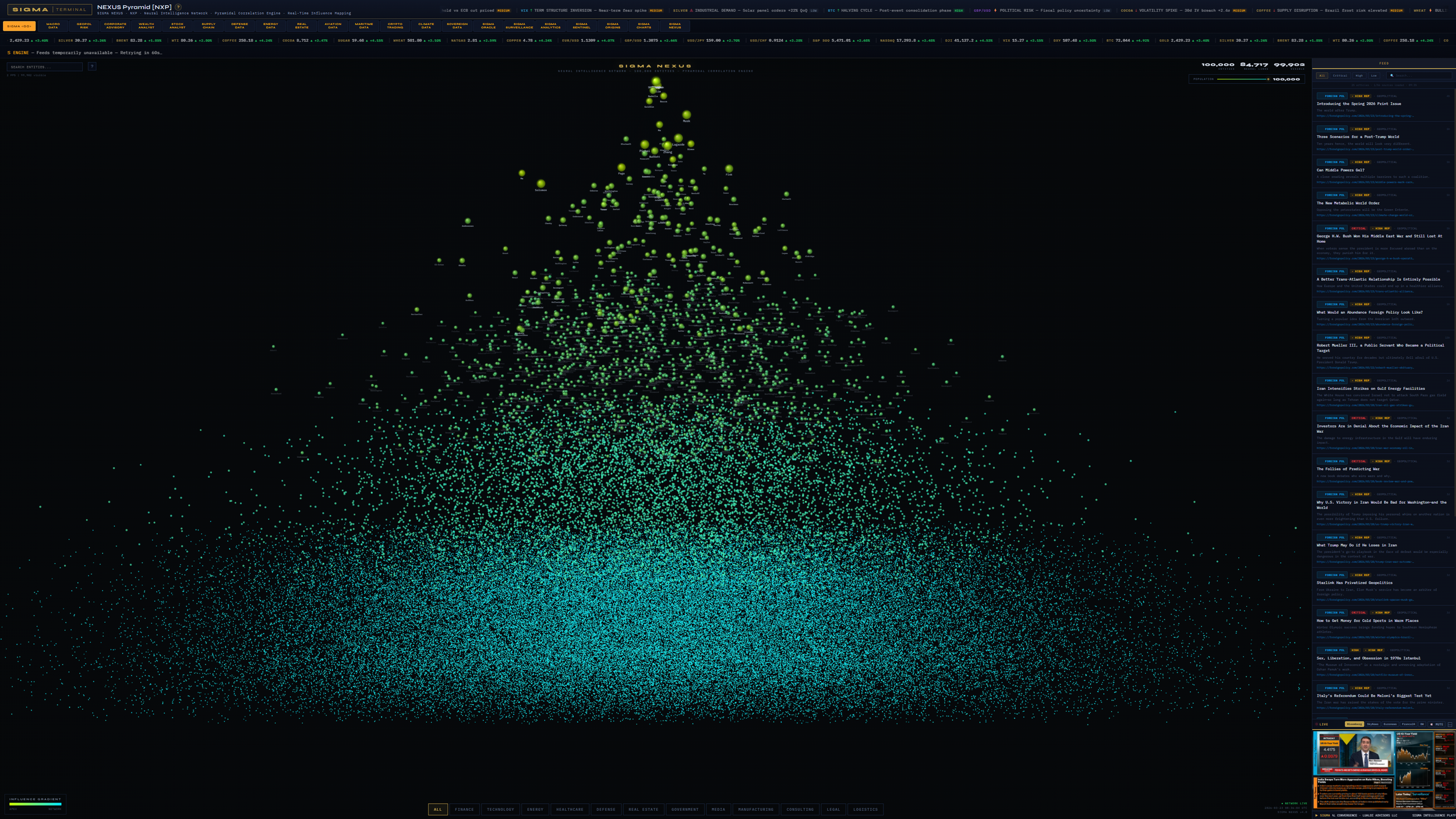

THE SIGMA MODEL
A Quantitative Algorithm for Discovering Structure in Complex Data
SIGMA is Lualdi Advisors’ proprietary quantitative algorithm, developed over 15 years of systematic research to do one thing exceptionally well: find structure where others see noise. The model identifies patterns, detects regime changes, and generates optimal decision strategies across financial markets, corporate data, and any environment where the data is complex, the conditions shift, and the cost of a wrong decision is high. Built for speed and precision, SIGMA delivers results in milliseconds on a single server, no supercomputer required.
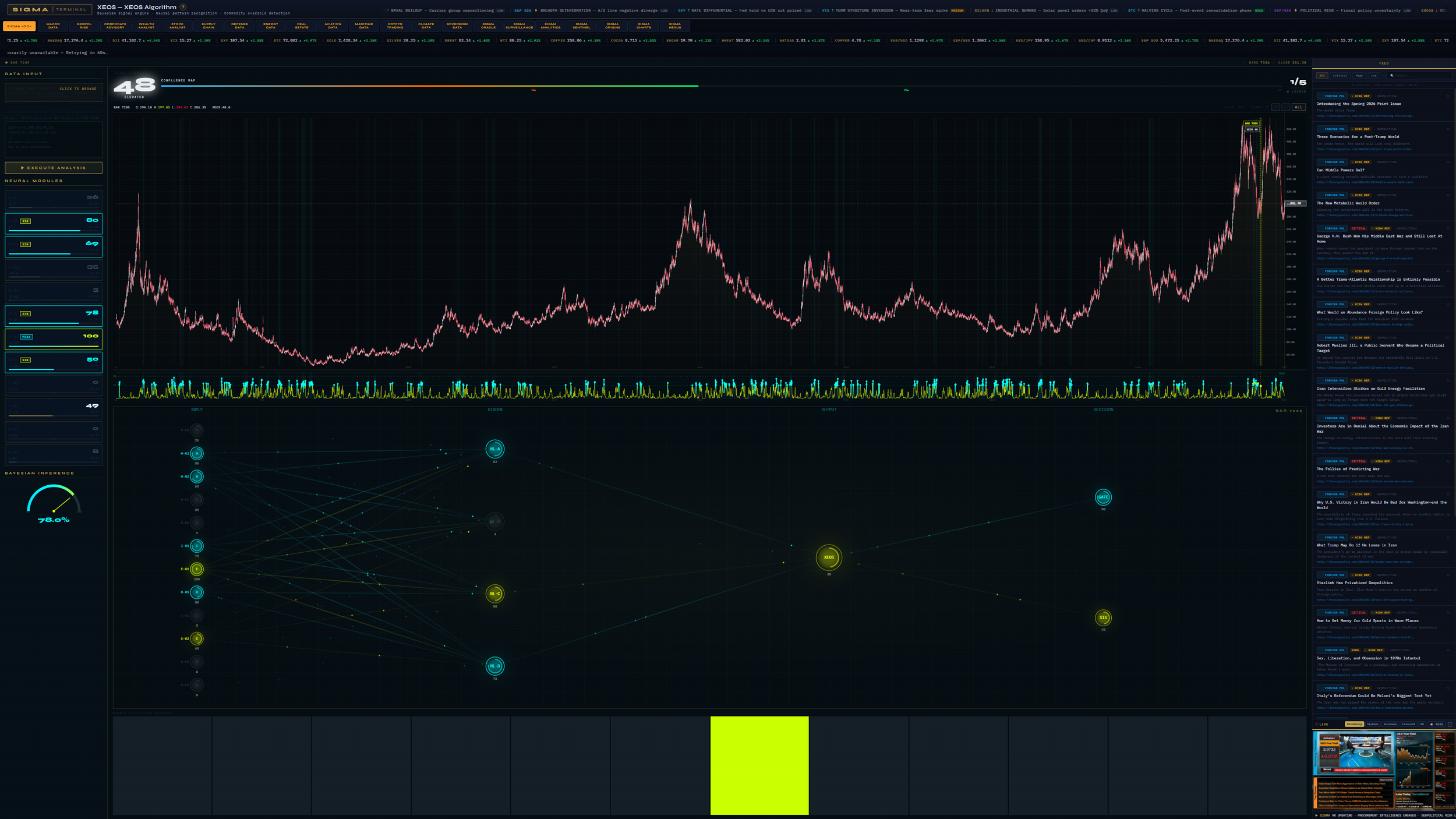
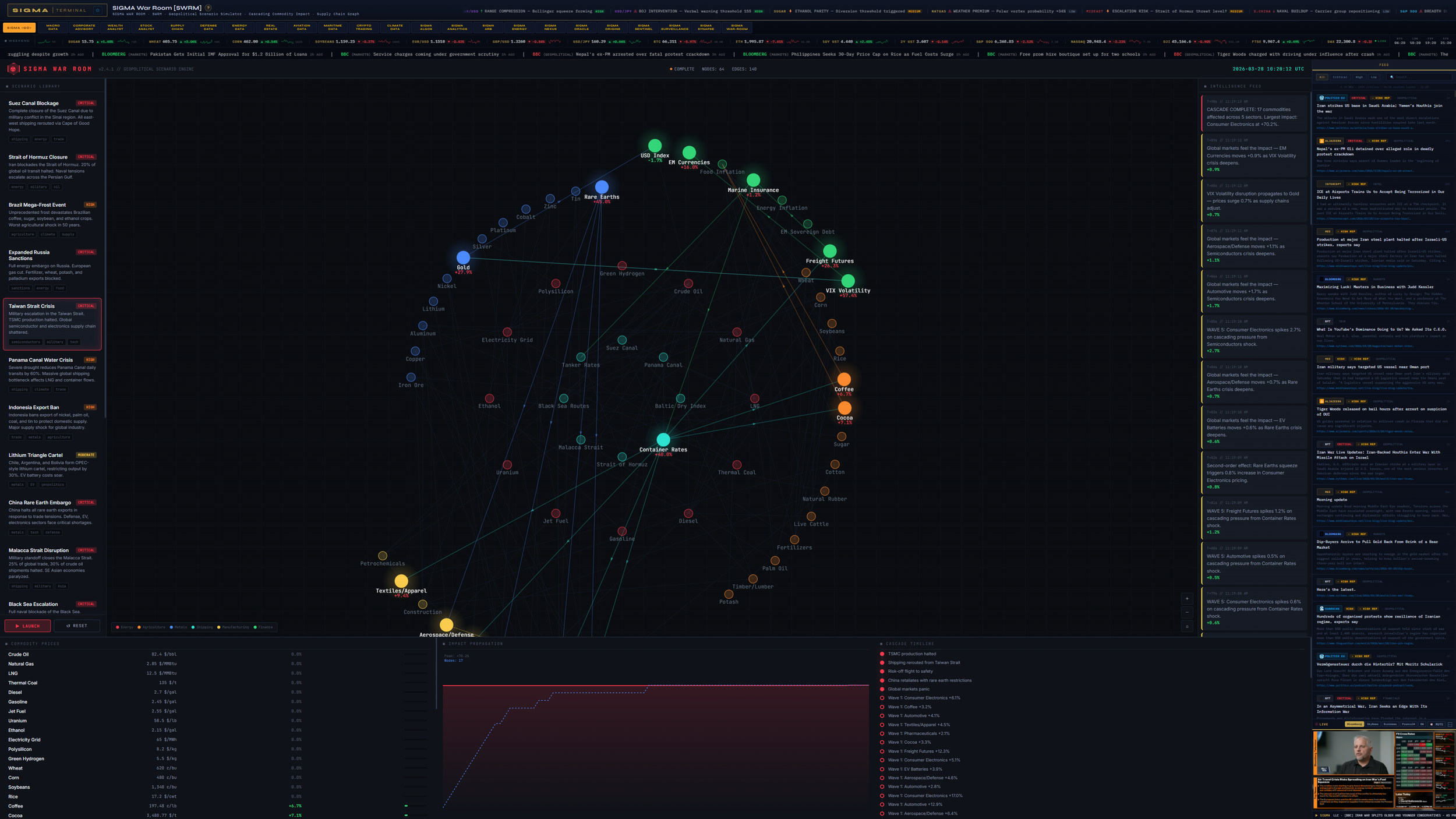
Built Over 15 Years.
SIGMA began in 2010 with a straightforward question: can the chaotic behavior of financial and corporate data be decomposed into patterns that a mathematical model can learn and exploit?
Financial markets and corporate operating environments are not random. But they are not orderly either. Prices, revenues, costs, and operational metrics move through distinct phases: periods of stability, periods of volatility, periods of transition. The relationships between variables shift over time. What worked last quarter may not work next quarter. Any model that assumes the world stays the same will eventually fail.
SIGMA was designed to handle this reality. The model does not assume stability. It actively detects when the environment is changing and adjusts its approach accordingly. Over three research phases, statistical pattern discovery (2010–2015), advanced computational methods (2015–2020), and reinforcement learning optimization (2020–present), the model evolved from a pattern recognition system into a decision-optimization engine that improves with every new data point it processes.
The research is ongoing. SIGMA is not a finished product that shipped and stopped. It is a living algorithm that continues to evolve as new data reveals new structure and as our research program pushes deeper into the mathematics of complex systems.
Discovering Structure in Complex Data
At its core, SIGMA does three things:
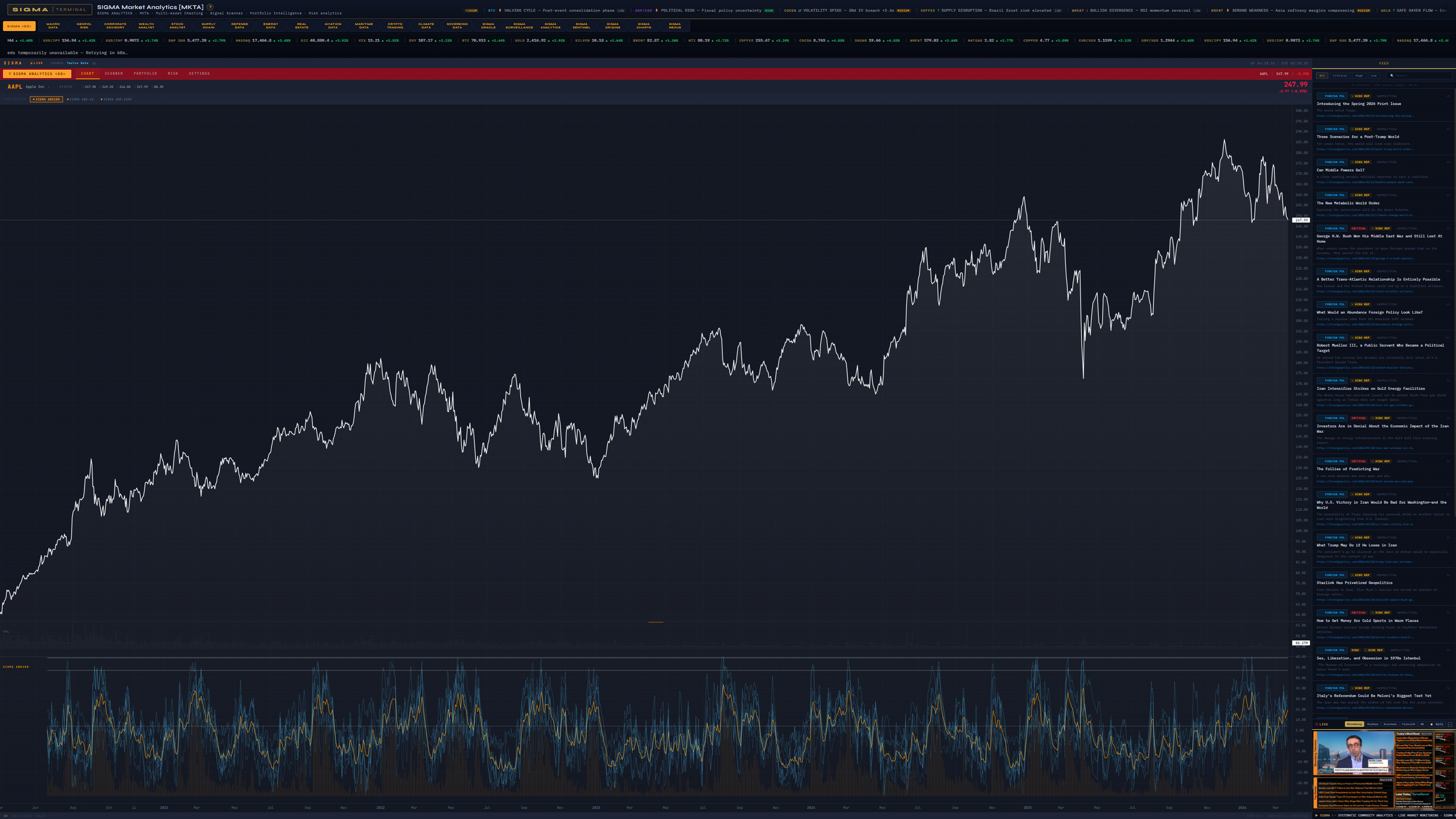
It finds patterns that are not visible on the surface. Financial and corporate data contain structure (recurring relationships, cyclical behaviors, dependencies between variables) that conventional analysis cannot detect because the patterns are too subtle, too multi-dimensional, or obscured by noise. SIGMA’s mathematical framework isolates these patterns and quantifies their reliability.
It detects when conditions are changing. Most analytical models are built on the assumption that the future will resemble the past. SIGMA is built on the opposite assumption: that conditions will change, and the model must recognize the transition as it happens. The algorithm continuously monitors for regime shifts, moments when the underlying dynamics of a system move from one state to another. These transitions are where the greatest risks and opportunities emerge, and SIGMA is designed to identify them as they begin, not after the fact.
It learns what to do, not just what might happen. This is the critical distinction. Most models stop at prediction: they estimate a future value and leave the decision to someone else. SIGMA goes further. Using reinforcement learning, the algorithm learns decision strategies, not just what is likely to happen, but what action to take, when to take it, and with what level of confidence. The model has been trained through millions of simulated decision scenarios, learning which strategies produce the best outcomes under which conditions. The output is not a forecast. It is a recommended course of action.
Four Stages of Intelligence
SIGMA processes data through four stages. Each stage builds on the previous one, creating a pipeline that transforms raw data into actionable intelligence.
Stage 1: Ingestion
SIGMA absorbs data continuously from multiple sources. In financial applications, this includes market prices, trading volumes, economic indicators, and corporate data. In corporate applications, it can include revenue streams, cost structures, operational metrics, inventory levels, and external market conditions. The algorithm is built to handle real-world data which is messy, incomplete, irregularly timed, and arriving from different sources at different speeds.
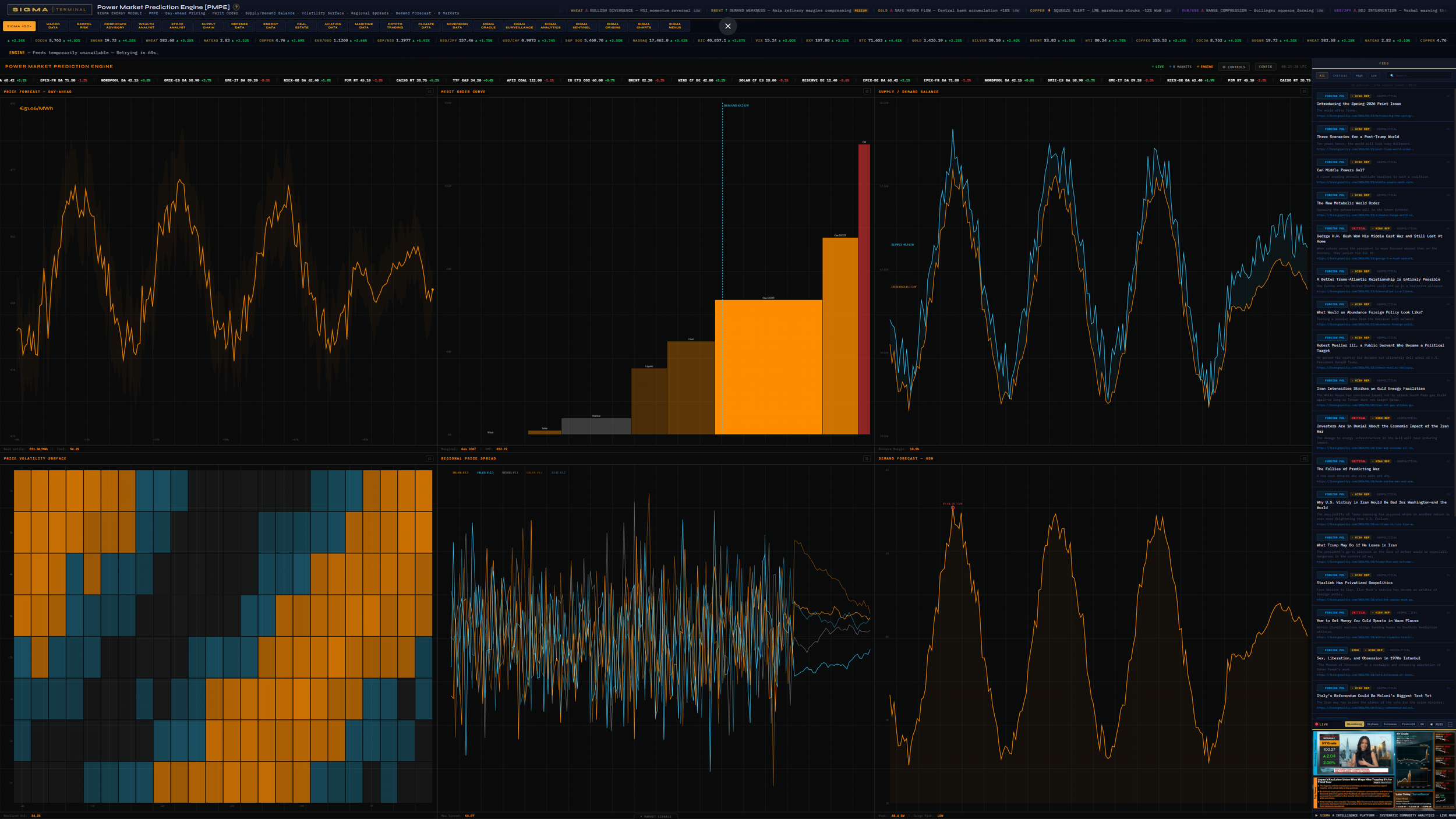
Stage 2: Structure Discovery
The algorithm scans incoming data for hidden structure: recurring patterns, anomalies, and relationships between variables that are invisible to conventional analysis. SIGMA is particularly effective at identifying regime changes, the moments when the underlying dynamics of a market or business environment shift from one state to another. A market transitioning from stable to volatile. A supply chain shifting from balanced to constrained. A cost structure moving from predictable to erratic. These transitions are where the most significant decisions need to be made, and SIGMA detects them early.
Stage 3: Decision Optimization
This is where SIGMA diverges from conventional analytics. The model uses reinforcement learning, the same mathematical framework that taught machines to master games like chess and Go, not by memorizing positions, but by playing millions of games and learning which strategies win.
SIGMA applies this approach to financial and corporate decision-making. The algorithm has been trained through millions of simulated scenarios, learning which actions produce the best outcomes under which conditions. It accounts for timing, because acting at the right moment matters as much as acting in the right direction. It accounts for risk, because the cost of being wrong is rarely symmetric. And it accounts for constraints, because real decisions happen within budgets, timelines, and operational realities.
The model uses specialized agents that each focus on a different dimension of the decision. One detects the current regime. Another optimizes timing. A third manages risk exposure. These agents work together to produce a single, coherent recommendation that balances opportunity against downside.
Stage 4: Probabilistic Output
SIGMA does not produce a single answer. It produces a range of possible outcomes, each with a probability attached. No model can predict the future with certainty. What a good model can do is map the landscape of possibilities, tell you the most likely outcomes, how confident it is, and how the picture changes under different assumptions. SIGMA’s output includes directional conviction, confidence levels, scenario analysis, and recommended actions calibrated to your specific risk tolerance.
Fast, Lean, Deployable Anywhere
A model that takes hours to produce an answer is useless when decisions need to happen in minutes. SIGMA was engineered from the start for speed and efficiency.
SIGMA can run inside an organization’s own infrastructure. There is no need to send proprietary data to an external service. The algorithm runs on a single server, making it deployable behind corporate firewalls and in environments where data security is a requirement, not an option.
The efficiency comes from three design choices made during the research phase: a compression technique that makes the model dramatically smaller without meaningful loss of accuracy, a computation approach that only uses the resources needed for each specific task, and an architecture that activates only the relevant components for each analysis. These are structural advantages built into the algorithm, not optimizations added after the fact.
Where SIGMA Is Applied
SIGMA’s algorithm is domain-agnostic. The same mathematical core adapts to different environments through calibration. It has been deployed across:
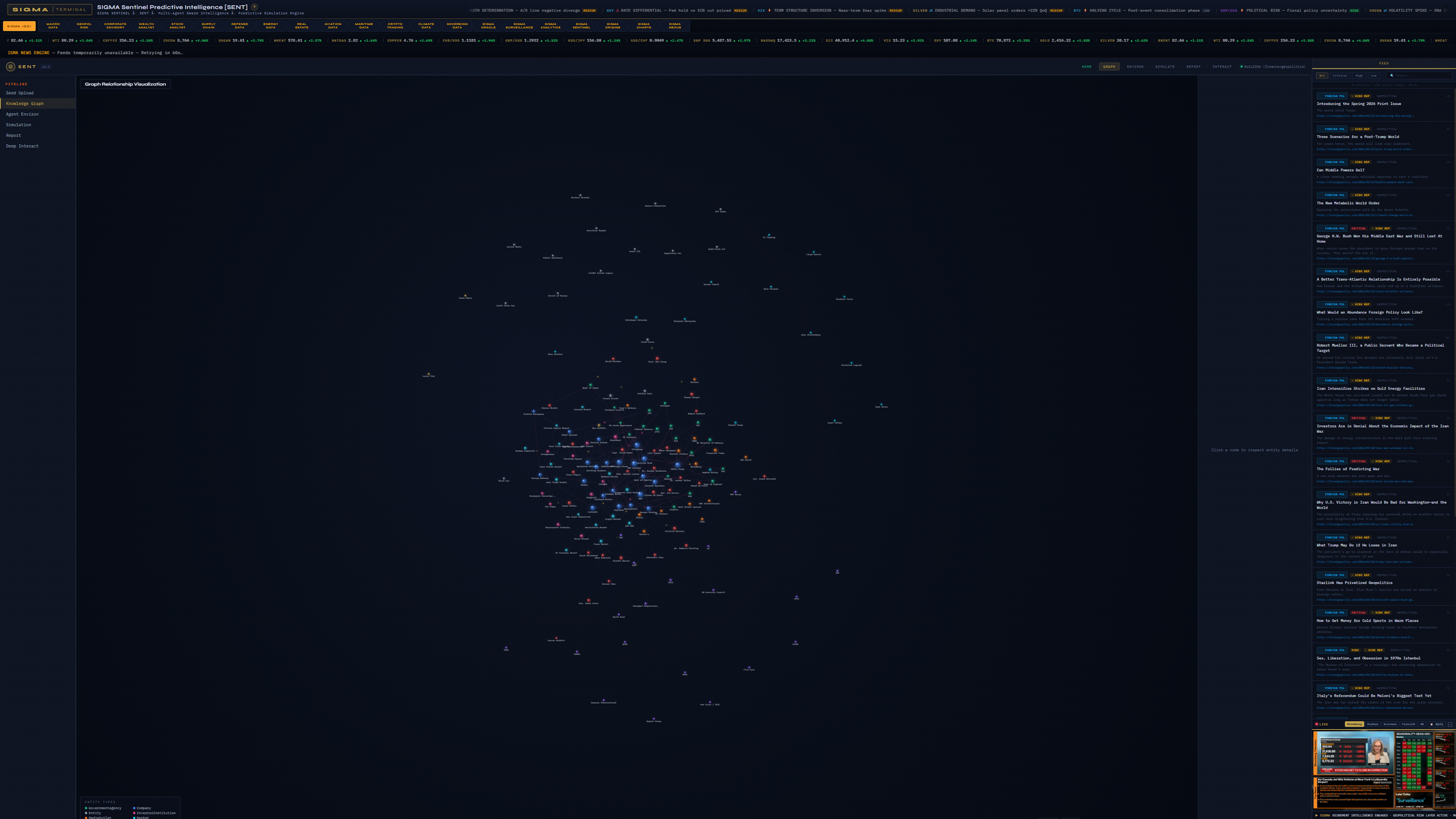
Commodity Markets: The model’s original deployment and deepest application. SIGMA analyzes price dynamics, supply-demand patterns, and market positioning across agricultural products, energy, and metals. This is where 15 years of research began.
Financial Markets: Equity analysis, cross-asset correlations, and portfolio risk. The model identifies regime shifts in market behavior and generates timing-optimized strategies.
Corporate Intelligence: Revenue forecasting, cost structure analysis, and operational efficiency modeling. SIGMA processes corporate data series to surface trends, anomalies, and decision windows that traditional business intelligence misses.
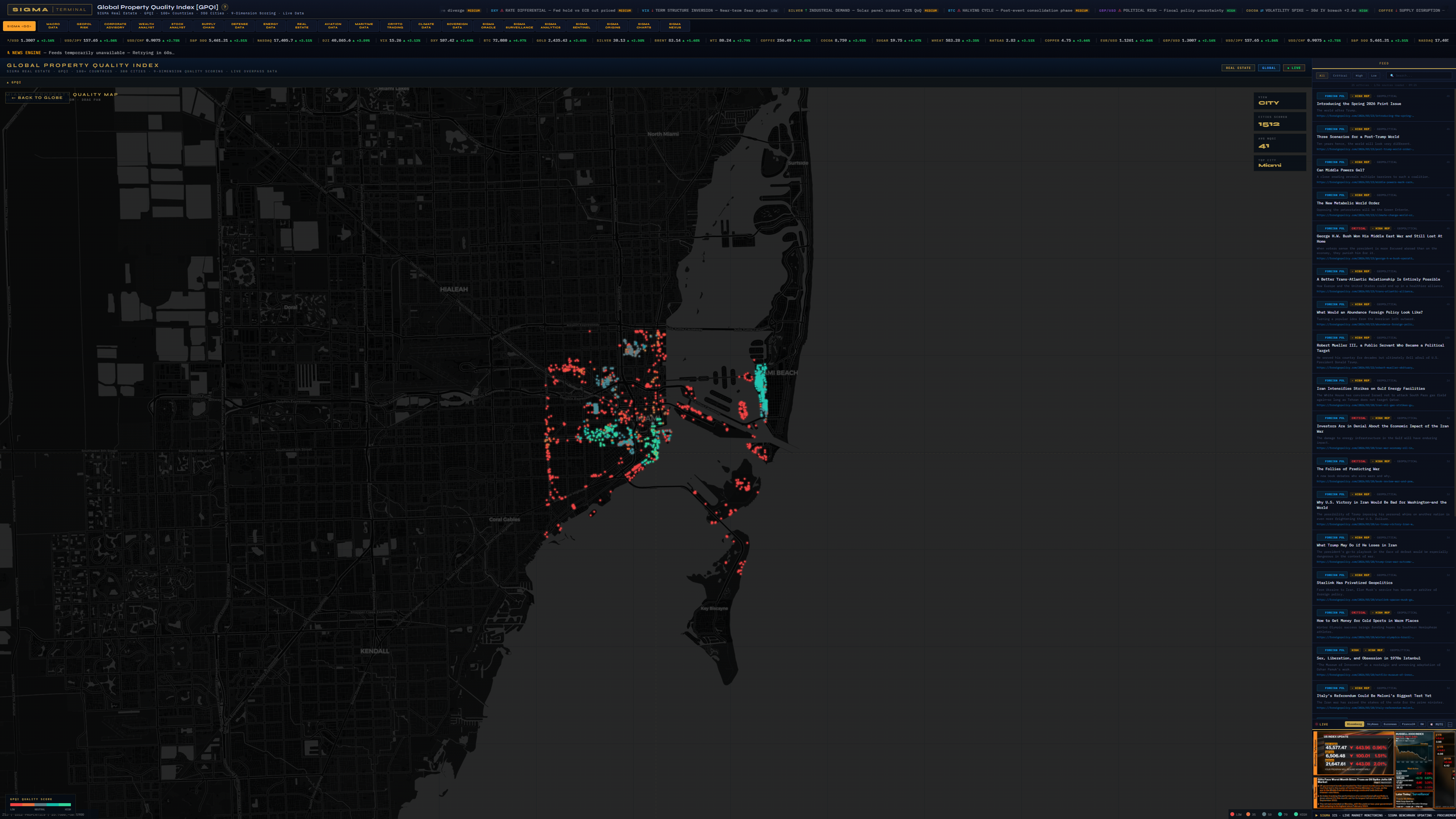
Real Estate: Market cycle detection, transaction pattern analysis, and valuation forecasting using property data, demographic trends, and macro indicators.
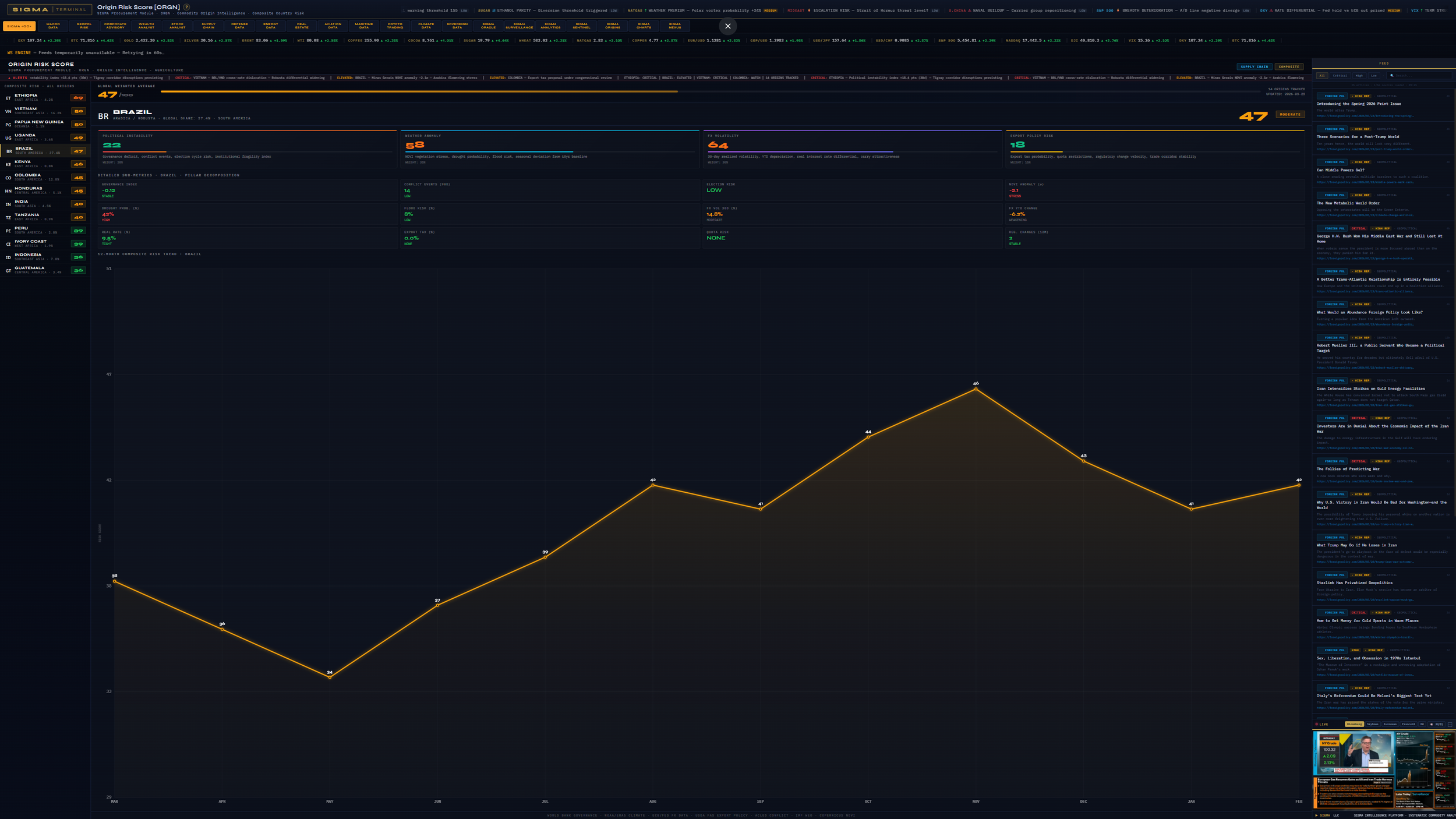
Supply Chain: Disruption detection, demand forecasting, and routing optimization across logistics networks. The model identifies emerging stress before it reaches operational metrics.
Energy and Infrastructure: Demand forecasting, anomaly detection, and resource allocation across production and distribution systems.
Geopolitical and Macro Risk: Early-warning signals from global data feeds. The model quantifies risk exposure and detects structural shifts in the operating environment.
Why This Approach Works Where Others Fail
Most analytical tools fail for the same reason: they assume the world is stable. They are trained on historical data and project those patterns forward. When conditions change, they break.
SIGMA is built on a different premise. The algorithm does not assume stability. It actively monitors for change and adjusts in real time. It does not memorize historical patterns. It learns decision strategies that evolve as conditions shift. And it does not produce static forecasts. It generates probability-weighted recommendations that account for multiple possible futures at once.
The practical result is a model that does not become less useful over time. Because the reinforcement learning engine continuously learns from new data and new outcomes, SIGMA maintains its edge even as the environments it operates in evolve. This is not theoretical. It is the reason the algorithm has been in continuous development and operation for over 15 years without requiring a fundamental rebuild.
How We Know It Works
Any serious organization evaluating a quantitative model should ask: how do you know it works, and how do you know it will keep working?
Every update is tested on unseen data. Before any change goes into production, the algorithm must demonstrate measurable improvement on data it has never seen. Updates that only work on historical data but fail on new data are rejected.
Performance is measured across all conditions. SIGMA is evaluated independently in stable markets, volatile markets, and transitional periods. The model must perform well across all of them. An algorithm that thrives in calm conditions but fails during stress events is more dangerous than one that performs consistently everywhere.
The model is stress-tested against extreme scenarios. Flash crashes, liquidity withdrawals, coordinated dislocations, data feed failures. SIGMA must handle adversarial conditions, not just normal ones.
Degradation is caught automatically. Live performance is monitored continuously. If the model’s accuracy begins to slip, the system initiates retraining using the latest data within 24 hours. SIGMA has never required a full rebuild — its continuous learning architecture adapts incrementally.
Transparency
We understand that trusting a quantitative model requires confidence in how it works. Institutional clients and prospective clients are welcome to review SIGMA’s methodology, validation results, and live performance under a confidentiality agreement. We encourage diligence because the model’s value comes from the depth of the research, not from keeping the approach opaque.
Frequently Asked Questions
-
SIGMA is a quantitative algorithm that uses artificial intelligence, specifically reinforcement learning, as a core technique. It is not a general-purpose AI. It is a specialized mathematical engine designed for a specific class of problem: discovering structure in complex data and optimizing decisions under uncertainty.
-
Any structured data series where patterns exist but are difficult to detect through conventional analysis. The model has been applied to financial market data, corporate operating metrics, real estate transactions, supply chain logistics, energy systems, and geopolitical indicators. It adapts to each domain through calibration, but the core algorithm is the same.
-
Forecasting models predict what might happen. SIGMA optimizes what to do about it. The algorithm learns decision strategies that account for timing, risk, and operational constraints, not just directional estimates. A prediction without a recommended action is half an answer. SIGMA provides both.
-
SIGMA runs on a single server instead of requiring a large computing cluster. This means the model can be deployed inside your own infrastructure, behind your firewall, without sending proprietary data to external services. The efficiency comes from how the algorithm was designed, a smaller model that retains nearly all of the accuracy of a much larger one, using only the resources it actually needs for each task.
-
Contact Lualdi Advisors at info@lualdiadvisors.com to schedule a briefing. We start with a conversation about your decision environment, your data, and where the most significant analytical gaps exist.
The Model Is the Edge.
Every decision made under uncertainty is bounded by the quality of the analysis behind it. SIGMA is a quantitative algorithm shaped by 15 years of systematic research into how complex systems behave. It does not predict — it optimizes. It does not assume stability — it adapts. It does not require a data center — it runs on a single server.
One algorithm. Any data series. Better decisions.