The breakthrough in four numbers
Seawater meets sunlight, and the desert finally has a water answer
The world faces two resource challenges that are ordinarily treated as separate policy problems: energy transition and water security. Dubai's Hassyan Seawater Desalination Plant, scheduled to begin operations in 2026 and reach full production in 2027, is the most important demonstration yet that these two challenges share the same infrastructure solution. A 818,000 cubic-metre-per-day reverse osmosis plant, powered entirely by the Mohammed bin Rashid Al Maktoum Solar Park, will supply drinking water to two million people without consuming a litre of fossil fuel.
The implications extend well beyond the Arabian Peninsula. Over two billion people globally live under high water stress today. By mid-century, nearly half the world's population is projected to face water insecurity in some form. Coastal regions with strong solar irradiance, covering much of the Middle East, North Africa, South and East Asia, and Pacific coastlines, share the conditions that make this model replicable. Dubai's proof of concept arrives precisely at the moment when the economics of that replication are becoming compelling.
Solar electricity at 1.6 cents per kWh and reverse-osmosis membrane technology have converged on a price point where freshwater can be produced from seawater at zero marginal carbon cost and at total cost competitive with conventional supply in water-scarce regions. Dubai has built the first national-scale proof. The same conditions exist across MENA, North Africa, the Mediterranean, the Pacific, and South and Southeast Asia. The water crisis and the energy transition share a single infrastructure answer - and capital is starting to price it.
The Arabian Gulf contains effectively unlimited seawater. The desert above it receives effectively unlimited sunlight. Solar desalination is the technology that connects these two infinities, and makes the scarcity problem disappear.
The desert's arithmetic, abundant sun, almost no water
The Arabian Peninsula is one of the driest landmasses on Earth. Average annual rainfall in Dubai measures barely 90–100 millimetres, less in many years. There are no permanent rivers, no meaningful lake systems, and groundwater aquifers that accumulated over millennia are being drawn down faster than they can regenerate. The population, meanwhile, has grown from a coastal settlement of tens of thousands to a global city of three million and counting.
For the past several decades, desalination has been the arithmetic that makes this growth possible, converting the one abundant resource (Gulf seawater) into the one that is critically scarce (freshwater). Dubai's existing desalination infrastructure supplies the majority of the city's drinking water. But the method used, largely thermal distillation and multi-stage flash processes, has extracted a heavy energy penalty. Fossil fuels were consumed to boil seawater; that energy use contributed to the same climate dynamics making the region's water scarcity worse over time.
Traditional multi-stage flash and multi-effect distillation plants heat seawater to produce freshwater through evaporation, energy-intensive, in most Gulf deployments meaning natural gas combustion. Even modern reverse osmosis plants, more efficient, still require substantial electricity, typically sourced from fossil grids. The result: the infrastructure solving the water crisis was simultaneously deepening the climate crisis making water scarcity worse. The two problems were coupled in a feedback loop. ~3.5–5 kWh per cubic metre of desalinated water - conventional thermal methods; RO substantially lower but still electricity-intensive.
Water demand in Dubai and across the GCC grows structurally with population, tourism, agriculture, and industrial expansion. Groundwater depletion is accelerating across the region. Climate modelling consistently predicts the Arabian Peninsula will become hotter and drier, shrinking already minimal rainfall, increasing evaporation, intensifying heat stress on water infrastructure. The water problem is not cyclical. It is directional. And the direction is toward greater scarcity. 2 billion+ people worldwide currently living under high water stress; projected to reach nearly half the global population by 2050.
The arithmetic of solar desalination resolves the feedback loop. The desert offers, in almost unlimited quantities, the very resource, heat and light, that makes its water scarcity feel intractable. The Hassyan plant is the engineering acknowledgement of this fact: use what the desert has in surplus to produce what it lacks. The rest of this note works through how that gets built, what it costs, and where it replicates.
The Hassyan plant, engineering the world's largest solar desalination facility
Commissioned by DEWA and ACWA Power with Veolia as the primary technology provider through its SIDEM subsidiary, Hassyan is scheduled to begin operations in 2026 and reach full production in 2027. At 818,000 cubic metres per day, sufficient to meet the daily drinking water needs of two million people, it will become the largest desalination facility in the world powered exclusively by renewable energy.
| Parameter | Specification | Notes |
|---|---|---|
| Daily output | 818,000 m³/day | Second-largest RO plant globally by volume; largest powered exclusively by solar |
| Population served | 2 million people | Full daily drinking-water requirements for Dubai's residential + commercial population |
| Total investment | €848 million | Including Veolia / SIDEM's €295M technology contract for pre- and post-treatment |
| Desalination technology | Two-pass SWRO | Seawater reverse-osmosis membrane system at 43–45% conversion, optimised for Gulf salinity |
| Pre-treatment | Spidflow + DMF | Veolia's proprietary dissolved-air flotation + dual-media filters, extends membrane life |
| Energy source | 100% solar PV | MBR Solar Park, zero fossil fuel consumed during plant operation |
| Carbon emissions | Zero (operational) | Direct displacement of fossil-fuel-powered desalination capacity |
| Commissioning | 2026–2027 | First operations 2026; full production 2027 under current project schedule |
| Brine management | Controlled discharge | Temperature, salinity, key parameters treated to meet Gulf ecosystem standards |
The choice of reverse osmosis over thermal desalination is itself significant. Thermal processes, still prevalent across Gulf desalination infrastructure, require energy to heat water, making the transition to renewable power considerably harder because heat is more difficult to source from intermittent solar than electricity. Reverse osmosis requires electricity, which solar panels produce directly. The alignment of the technology with the energy source is a structural advantage that makes the Hassyan design genuinely replicable in a way solar-thermal desalination cannot match at equivalent scale.
Veolia's Spidflow pre-treatment addresses one of the persistent challenges in high-volume seawater RO: fouling of the membranes by biological material, particulates, and dissolved organics in warm Gulf waters. Dissolved air flotation removes suspended material at the surface before it reaches the membranes, extending membrane life and reducing maintenance frequency, critical variables in the long-term economics of large-scale desalination.
The power source, Mohammed bin Rashid Al Maktoum Solar Park
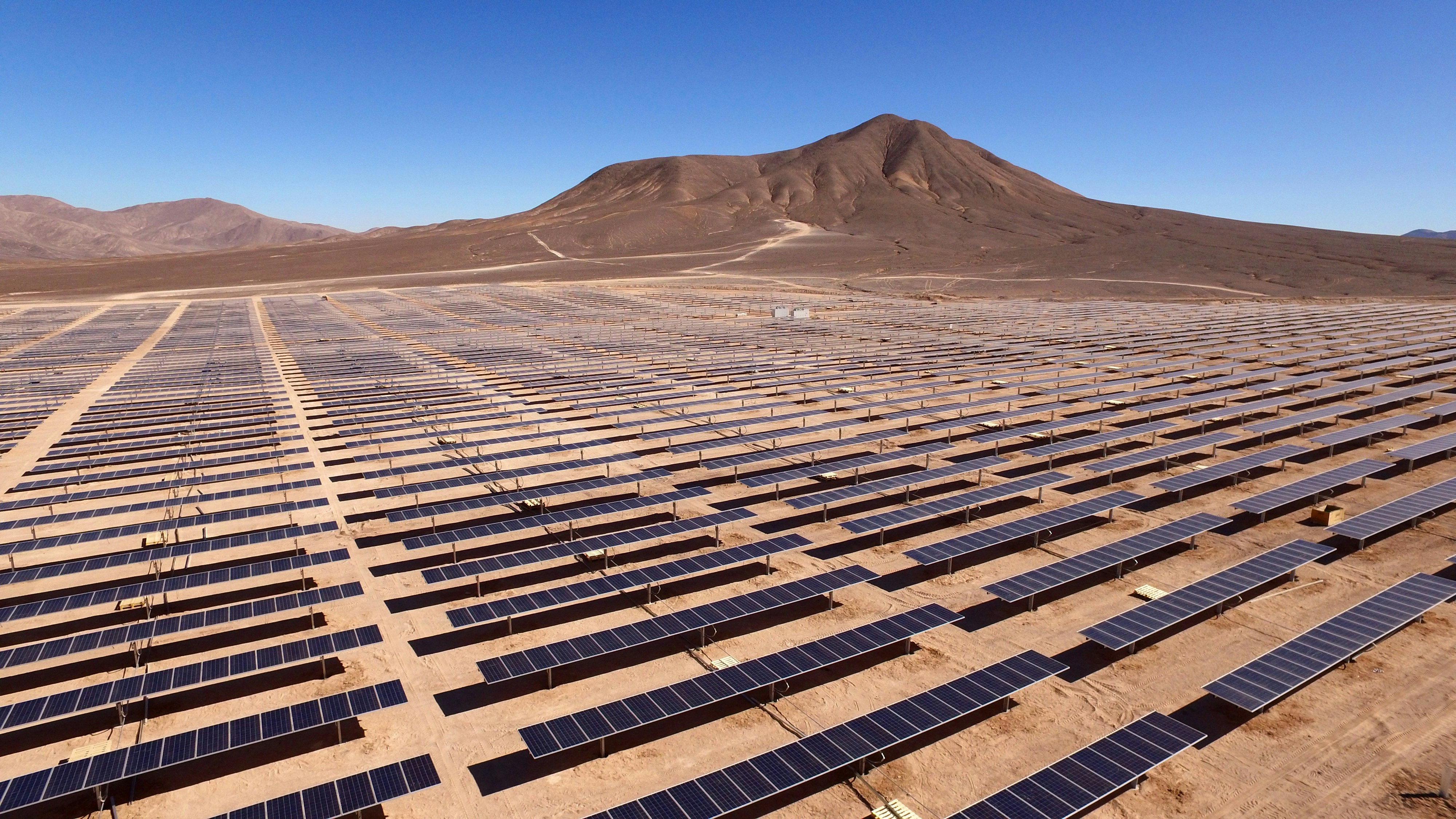
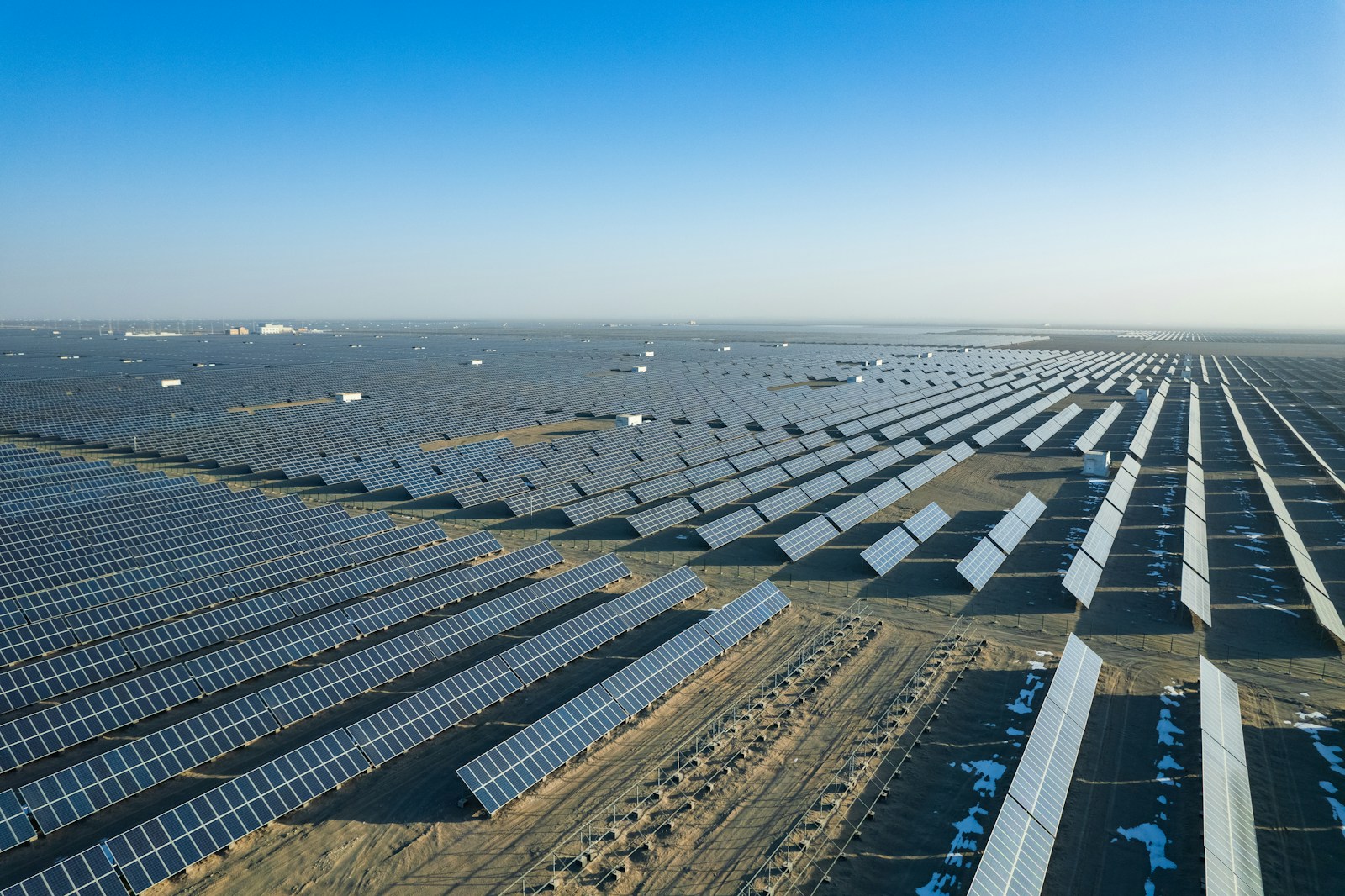
The Hassyan desalination plant does not stand alone. Its power source, the Mohammed bin Rashid Al Maktoum (MBR) Solar Park, is itself one of the most consequential renewable energy projects on the planet. Located in Saih Al-Dahal, 50 kilometres south of Dubai, the MBR Solar Park spans 77 square kilometres across terrain that was previously featureless desert.
It is implemented by DEWA through the Independent Power Producer (IPP) model - a structure in which private consortiums finance, build, own, and operate individual project phases under long-term power purchase agreements with the government utility. This model has been the mechanism through which Dubai has consistently achieved world-record low electricity costs, because it transfers construction and operating risk to private capital while leveraging government creditworthiness to secure low financing costs.
| Phase | Capacity | Year | LCOE (USD/kWh) | Developer · Significance |
|---|---|---|---|---|
| Phase 1 | 13 MW PV | 2013 | Undisclosed (high) | First Solar (EPC) · Proof of concept; established grid framework |
| Phase 2 | 200 MW PV | 2017 | $0.0584 | ACWA Power / TSK · World record at time; first large IPP solar in MENA |
| Phase 3 | 800 MW PV | 2020 | $0.0299 | Masdar · First solar-tracking in MENA; 20–30% yield improvement |
| Phase 4 | 950 MW CSP+PV | 2023–24 | $0.073 (CSP) | ACWA Power · Molten-salt storage; 600 MW trough + 100 MW tower |
| Phases 5–6 | 2,700 MW PV | 2021–26 | $0.016215 (Ph.6) | ACWA / Masdar · World-record LCOE; Phase 6 alone serves 540,000 households |
| Phase 7 | 2,000 MW PV + 1,400 MW BESS | 2026+ | TBD (expected record) | 6-hour storage; approaches baseload; powers desalination 24/7 |
The Phase VI LCOE of $0.016215 per kWh - approximately 1.6 cents, represents the lowest unit cost of electricity from any power source, anywhere in the world, at the time of its award. That record is not primarily a function of Dubai's sunshine (which, while excellent, is not dramatically superior to dozens of other locations globally). It reflects the convergence of mature photovoltaic technology, competitive international project financing, a creditworthy government offtaker, and a project-development process optimised over seven phases and more than a decade.
Phase VII is equally significant. Adding 1,400 MW of battery energy storage with a six-hour duration changes the operational profile of the solar park from a daylight-hours generator to a base-load-capable facility. For desalination specifically, consistent 24-hour power supply matters, water plants operate most efficiently at steady state, and storage allows solar generation to smooth out the diurnal production cycle that intermittent solar alone cannot.
A solar park that has driven electricity costs to 1.6 cents per kilowatt-hour, lower than coal, gas, or nuclear in equivalent markets, is not a proof of renewables' viability. It is a statement about the direction of all energy economics going forward.
The IPP model, how private capital financed a national infrastructure asset
The financial architecture of the MBR Solar Park and Hassyan desalination complex is as analytically interesting as the technology. Dubai's consistent ability to achieve world-record low project costs is not accidental, it is the product of a deliberate financing model refined over fourteen years of successive project phases.
Under the Independent Power Producer framework, DEWA issues a public tender for each project phase. Private consortiums, combining a project developer, an EPC contractor, and a financing partner, bid to build, own, and operate the facility for a contractually defined period (typically 25–35 years) under a power purchase agreement with DEWA as the sole offtaker. The government assumes no construction risk. The private consortium assumes no demand risk. The PPA provides the revenue certainty that lets project-finance debt be raised at rates approaching sovereign borrowing costs, consistently below commercial market rates for infrastructure investment in the region.
The combination of low-cost financing, global competitive tendering, and a creditworthy sovereign offtaker creates conditions for LCOE that no merchant power market can replicate. When Phase VI achieved $0.016215/kWh, less than 1.7 cents, that price reflected not just falling solar panel costs but the entire financial structure: long tenor (35 years), investment-grade counterparty (DEWA / government of Dubai), transparent competitive process attracting the most efficient international developers, and a project-execution track record that reduces perceived completion risk in lender models. Each successive phase has compounded the expertise and trust that makes the next phase cheaper to finance.
The Hassyan desalination plant applies the same fundamental architecture: private capital (ACWA Power as developer, Veolia / SIDEM as technology provider) financing a public infrastructure asset under a long-term offtake agreement with DEWA. The €295 million Veolia technology contract is the most significant single-vendor commitment in the project, reflecting Veolia's position as one of the world's largest water-infrastructure companies and signalling institutional confidence in the project's commercial structure.
The replication thesis, where Dubai's template applies
Hassyan's significance extends far beyond Dubai's water balance sheet. It is the first demonstration, at national supply scale, that solar-powered reverse-osmosis desalination is commercially and technically viable. That demonstration matters because the physical conditions that make it work in Dubai exist across a vast geography of water-scarce, sun-rich, coastally located nations.
The replication requirement is specific: a country needs coastline (for seawater access), high solar irradiance (for cheap electricity), water scarcity (the demand driver), and sufficient institutional capacity to structure and execute a project of this complexity. The intersection of these four conditions encompasses a substantial fraction of the developing world's most water-stressed populations.
Investment implications, where durable returns sit in the value chain
The Hassyan plant and MBR Solar Park together illustrate an infrastructure investment thesis becoming structurally more compelling as two previously separate sectors, renewable energy and water infrastructure, converge. For investors, the analytical question is not whether solar desalination will scale globally. It will. The question is which parts of the value chain capture the most durable returns as it does.
| Segment | Key players (illustrative) | Commercial position | Investment characteristic |
|---|---|---|---|
| Solar PV manufacturing | First Solar, Chinese OEMs, emerging domestic | Commoditising; cost-driven competition | Margin pressure ongoing; prefer scale leaders |
| IPP developers / project finance | ACWA Power, Masdar, Engie, EDF Renewables | Strong; repeat-project expertise creates durable edge | Long-duration contracted cash flows; sovereign counterparty; inflation-linked |
| Battery energy storage | BYD, CATL, Tesla Energy, Fluence | Growing; Phase 7's 1,400 MW BESS signals demand | High growth; cost declining; critical for 24/7 desalination |
| RO membrane manufacturing | DuPont, Toray, LG Chem, Koch Separation | Concentrated oligopoly; innovation-driven pricing power | High-value recurring consumable; replacement cycle = annuity revenue |
| Pre-treatment / engineering | Veolia (SIDEM), Suez, Acciona Agua | Differentiated; proprietary processes; specification preference | Technology-embedded contracts; long durations; O&M recurring |
| High-pressure pumps | Flowserve, Sulzer, KSB | Reliable industrial; tied to RO capex cycle | Infrastructure-linked; lower technology risk than membranes |
| State water utilities | DEWA, Saudi Water Authority | Sovereign creditworthiness; structural monopoly | Infrastructure-quality credit; limited upside, strong downside |
| Private water operators | Veolia, Suez, Acciona, Consolidated Water | Operational expertise → multi-project advantages | Recurring O&M revenue; international growth via replication |
The most structurally attractive position in the solar desalination value chain is arguably the membrane and pre-treatment technology segment. Unlike solar panels, which are approaching commodity economics, RO membranes require continuous innovation to improve flux rates, reduce fouling, and withstand the pressures and salinities of large-scale operation. The oligopoly of producers, dominated by a small number of chemical and materials companies, maintains pricing power the solar panel market has largely lost. Membranes are also a recurring consumable: they degrade and require replacement on cycles measured in years rather than decades, creating an annuity revenue stream that continues long after the project-development phase ends.
The IPP developer segment offers a different but equally compelling proposition. ACWA Power's involvement in both the MBR Solar Park (multiple phases) and Hassyan reflects strategic positioning as the world's most experienced builder of exactly this type of infrastructure. Each project won is a reference that reduces the cost of winning the next. That compounding expertise advantage is difficult to replicate without the project track record, which is why the sector is more concentrated than a purely competitive market would suggest.
The sea was always there. Now we can finally drink it.
For centuries, the peoples of the Arabian Peninsula survived in one of the world's most resource-hostile environments by understanding, with precision, how to extract maximum value from what little they had. The desert does not offer water. It offers, in almost unlimited quantities, something else: heat and light. The Hassyan plant is, in a sense, the technological culmination of that desert logic, using the one resource that exists in abundance to produce the one that does not.
What makes the moment analytically interesting is the intersection of two independently reaching cost curves. Solar electricity has fallen to roughly $0.016 per kilowatt-hour at the MBR Solar Park, a cost that would have seemed implausible a decade ago and that makes the energy cost of desalination, once the dominant operating expenditure, negligible in the total cost equation. Simultaneously, reverse-osmosis membrane technology has improved sufficiently that the energy requirement for desalination has dropped to where the combination of cheap solar and efficient membranes produces freshwater at costs competitive with other major supply sources in water-scarce regions.
The global water crisis is not going to be solved by one plant in one country. But proof of concept at national supply scale, 818,000 cubic metres per day, two million people served, zero fossil fuels consumed - removes the most important remaining objection to the universal adoption of this model: that it could not work at the scale societies actually need.
The world's water crisis and the world's energy transition share, it turns out, a common solution. The desert, the driest, brightest place on Earth, figured that out first. The rest of the world is just beginning to catch up.
Lualdi Advisors is a quantitative research firm. We build predictive models, AI systems, and operational ontologies. We publish working notes on the topics that intersect with the firm's practice, infrastructure economics, energy transition, MENA strategy. Open a conversation if you want the firm's view on the MENA water-infrastructure replication trajectory, the IPP model's transferability, or comparative analysis of the solar-desalination value chain.
Source notes. DEWA official communications (dewa.gov.ae), Aquatech industry reporting, Wikipedia's Mohammed bin Rashid Al Maktoum Solar Park entry, Global Energy Monitor, MBRSIC (mbrsic.ae), Bayut infrastructure analysis, Engineerine editorial coverage. Performance figures reflect published project specifications and bid awards. The investment-implications framework is Lualdi Advisors' analytical view, illustrative rather than prescriptive. Forward-looking statements are inherently uncertain; actual project timelines, capacities, and outcomes may differ materially. This material does not constitute investment, legal, tax, or financial advice. Cover photograph by Unsplash photographer (aerial of a desert solar farm), illustrative of the MBR Solar Park's scale and terrain.