
The story in four numbers
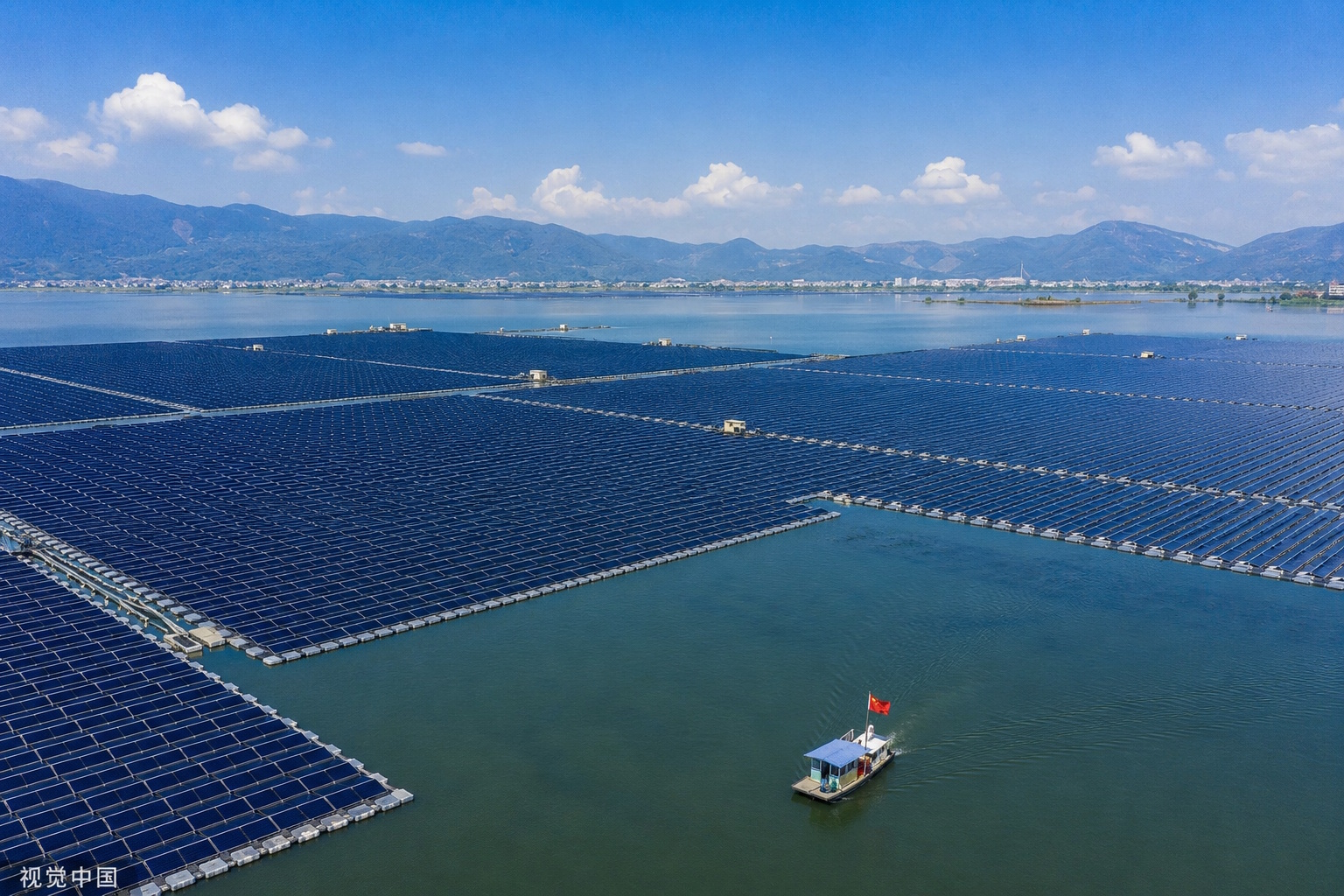
The 70 MW CECEP–Ciel et Terre floating solar installation at a former coal-mining subsidence area in Yongqiao District, Suzhou City, Anhui Province is not primarily a story about one project reaching completion. It is a proof of concept for a category-level investment thesis: that the vast inventory of flooded, effectively unusable land scarred by industrial coal extraction, in China and, to varying degrees, across coal-dependent economies globally, represents a latent pipeline for floating photovoltaic deployment that land-constrained solar markets have barely begun to price. The site's former function is not incidental; it is structurally advantageous. Flooded mine subsidence areas combine near-zero opportunity cost with the frequent proximity of legacy grid infrastructure, manageable water depths that simplify float anchoring, and a legal-use designation that avoids the agricultural-land protections that complicate ground-mounted solar permitting across much of China's arable provinces. The project is jointly reported under UN sustainable development documentation by CECEP, a major Chinese state-owned renewable energy developer, and Ciel et Terre, the French company that pioneered the modular floating PV platform technology deployed here. Together, they demonstrate a replicable model whose pipeline is considerably larger than any single installation suggests.
When an environmental liability becomes an energy asset
Coal mining subsidence is one of the structurally underappreciated consequences of intensive underground extraction. As coal seams are removed, the overlying strata lose support and subside; where the resulting depressions intersect the water table, lakes form, typically contaminated by residual mining chemistry, unusable for agriculture, legally complicated for construction, and representing an ongoing environmental liability for both the operating company and the local government responsible for remediation. China's coalfields, concentrated heavily in Anhui, Shanxi, Shandong, and Jiangsu provinces, have produced an estimated several hundred thousand hectares of such flooded subsidence terrain over decades of intensive underground mining. The conventional response to these sites has been remediation planning that rarely materializes at the required scale, combined with effective abandonment as productive assets. The CECEP–Ciel et Terre project proposes a different accounting: rather than treating the subsidence lake as a cost to be managed, it treats it as a site characteristic to be monetized. The water surface that made the land unusable for its prior purposes becomes the enabling condition for a new one. This reframing has consequences that extend well past a single 70 MW installation.
01 · Why flooded mining land is structurally ideal for floating solar
The advantages of former coal-mining subsidence areas for floating PV are not incidental to the technology, they are, in several respects, more favorable than purpose-built reservoir sites.
Four structural characteristics converge to make flooded coal-mining areas among the most suitable sites in the floating PV deployment landscape. The first is opportunity cost: ground-mounted solar in China, as in most land-constrained economies, competes with agricultural use and must navigate restrictions on converting arable or semi-arable land to energy infrastructure. Flooded subsidence areas carry essentially zero competing productive use, they generate no crop yield, support no grazing, and in most cases create active regulatory burdens for their owners. The solar developer is not displacing an existing productive use; it is converting a stranded liability. The second is grid proximity: coal mining areas exist because coal was extracted and transported, and extraction operations at scale require substantial power supply. Industrial-grade grid infrastructure, the substations, transmission lines, and interconnection capacity that represent a material fraction of any utility-scale solar project's development cost, already exists in the vicinity of most large mining sites. The 18-kilometer 110kV overhead line built for the Anhui project is, notably, a long connection relative to typical utility-scale solar projects; most mining-adjacent sites would expect considerably shorter interconnection distances, which would reduce this cost line materially. The third is water depth compatibility: underground coal mining creates subsidence depressions that are typically shallower than purpose-built reservoirs or natural lakes, often in the range of two to ten meters. Floating PV platform anchor systems, which must secure the array against wind and wave loading while accommodating seasonal water level variation, perform most cost-effectively in this depth range, reducing anchor complexity and cable length relative to deep-water deployments. The fourth structural advantage is permitting clarity: land designated as industrial mining area in China's land-use classification system is not subject to the agricultural-land conversion restrictions that affect ground-mounted solar permitting in many provinces. The bureaucratic pathway to a floating solar development permit on an existing mining subsidence site is, in principle, considerably less contested than an equivalent ground-mounted project on marginal agricultural land.
The flooded coal mine is not a compromised solar site, in several of the dimensions that determine project economics, it is a superior one. The opportunity cost is near zero, the grid often already exists, and the permitting baseline is cleaner than agricultural conversion. The constraint is not the site; it is the scale of deployment capital willing to engage with industrial-heritage locations.
02 · The Hydrelio platform and what it solved
Ciel et Terre's contribution to the Anhui project is not incidental technology sourcing, it is the enabling IP layer without which the floating deployment model does not exist at commercial scale.
The Hydrelio floating platform system, developed by Ciel et Terre, is a modular array of high-density polyethylene floats engineered specifically for the demands of a floating PV environment: UV resistance over a design life of twenty-five or more years, structural load transfer from wind and module weight across a distributed float network, and electrical isolation between the submerged float structure and the panel electrical systems. These requirements are more demanding than they appear from the outside. Standard ground-mounted racking has to resist wind and gravity but operates in a relatively stable environmental context; a floating system must additionally accommodate wave-induced dynamic loading, water level variation that can run to several meters seasonally, and the corrosion environment created by prolonged water contact. The monocrystalline PV modules used in the Anhui project were manufactured in China, a significant detail, because it confirms that the China-domestic supply chain for the panel layer was already cost-competitive and logistically straightforward by the time the project reached final investment decision in the mid-2010s. The float platform, sourced from the French side of the partnership, represents the specialized engineering layer that Chinese manufacturing had not yet commoditized at that point; the engineering, procurement, and construction services, by contrast, were provided entirely by Chinese entities: China Energy Conservation Solar Technology and the China Energy Engineering Group Shanxi Electric Power Design Institute. This division, French platform IP, Chinese EPC and modules, is precisely the pattern that technology transfer in capital-intensive infrastructure tends to follow: the specialized enabling layer imports from the innovator until domestic competitors develop equivalent capability, at which point the supply chain internalizes. For investors following the floating PV sector, the question of when and how rapidly Chinese manufacturers develop competitive floating platform products is directly relevant to Ciel et Terre's medium-term market position and margin profile.
| Parameter | Detail |
|---|---|
| Location | Yongqiao District, Suzhou City, Anhui Province, China |
| Site origin | Flooded coal-mining subsidence area |
| Installed capacity | 70 MW (monocrystalline PV modules) |
| Water surface | 140 hectares across 13 islets |
| Annual generation | >70,000 MWh (illustrative; ~21,000 households) |
| Grid connection | 18 km dedicated 110kV overhead line |
| Float system | Ciel et Terre Hydrelio (HDPE modular platform) |
| EPC | CECS Solar Technology / CEEGS Electric Power Design Institute |
| Completion | Late 2018 |
03 · Economics of floating versus ground-mounted solar
Floating PV's economic case rests on a set of site-specific advantages that must, in each project, more than offset a structural CAPEX premium relative to ground-mounted alternatives.
The primary economic driver in favor of floating solar in land-constrained markets is the elimination of land acquisition cost. In China's most productive agricultural provinces, precisely the regions where energy demand is also highest, arable land carries a significant and rising implicit cost. The regulatory restriction on converting Class I and Class II farmland to industrial or energy use is not absolute, but it creates permitting delays and mitigation obligations that add time and cost to ground-mounted project development. Floating solar on a water body that has no competing productive use bypasses this constraint entirely. The World Bank's 2018 floating solar market report, referenced in the CECEP–Ciel et Terre case study documentation, identifies the reduced evaporation benefit as an additional economic co-benefit: floating panels shade the water surface, illustratively reducing evaporative loss by a range of 30% to 70% depending on surface coverage and local climate, a material benefit in water-scarce regions where reservoir water has economic value for agriculture or municipal supply. A further modest efficiency benefit arises from the cooling effect of water proximity: photovoltaic panel efficiency declines with operating temperature, and the evaporative cooling effect of a water surface can maintain panel temperatures illustratively two to five degrees Celsius below equivalent ground-mounted installations, translating to a roughly one to two percentage point improvement in energy yield per unit of installed capacity. Against these advantages sits the CAPEX premium of the floating structure itself. Platform costs vary with design, manufacturer, and project scale, but industry estimates for early-generation projects placed the floating system at an illustrative premium of 15% to 25% over equivalent ground-mounted racking systems, though platform costs have declined steadily as the sector has scaled and competition has increased. Operations and maintenance cost profiles differ from ground-mounted systems in both directions: water access for panel cleaning can be more complex, but weed and vegetation management, a meaningful O&M line item for ground-mounted projects, is largely absent.
04 · China's subsidence pond inventory and the scale thesis
The CECEP Anhui project was briefly the largest floating PV installation in the world; its successor, planned by Three Gorges New Energy at reportedly twice the capacity, signals how rapidly the reference scale was moving at the time of completion.
The broader pipeline behind the Anhui project is the analytical core of the floating solar investment thesis in China. The country's intensive underground coal extraction over the preceding five decades has created a geographically concentrated inventory of flooded subsidence areas, predominantly in the provinces of Anhui, Shandong, Shanxi, Jiangsu, and Henan, collectively representing an estimated area of several hundred thousand hectares, though comprehensive mapping of the total available and suitable floating PV area within this inventory remains incomplete in publicly available literature. The policy context is explicitly favorable: the Chinese government has framed the conversion of former mining areas for renewable energy use as a component of its ecological restoration mandate, providing a regulatory tailwind that is relatively unusual for energy infrastructure in a permitting environment that can otherwise be complex. Three Gorges New Energy Company, one of the largest hydropower operators in the world and a rapidly expanding renewable energy developer, was reported to be developing a floating PV installation potentially approaching 140 MW at the time the CECEP case study was documented, which would represent twice the Anhui project's capacity and would itself be rapidly superseded by subsequent Chinese FPV buildout. The trajectory from 70 MW to 140 MW and beyond in the space of a few years is the China infrastructure scaling pattern that recurs across sectors: a credible pilot establishes technical and commercial viability, a larger state-owned enterprise replicates and expands, and the supply chain races to keep up with a deployment volume that quickly renders earlier scale assumptions obsolete.
The transition from the CECEP 70 MW pilot to Three Gorges at twice the capacity is not coincidence, it is the Chinese state-capitalist infrastructure playbook executing exactly as designed. The pilot de-risks; the major SOE scales; the platform supplier either captures that scale or watches a domestic competitor commoditize the technology beneath it.
China's flooded mining inventory is systematically mapped and prioritized for FPV development. Policy support sustains favorable permitting and grid access terms. Platform costs continue declining as domestic manufacturers compete with Ciel et Terre's Hydrelio. The model exports to other coal-legacy economies, India, Southeast Asia, Eastern Europe, with similar subsidence inventories and land constraints.
Grid congestion in coal-mining regions, already stressed by the transition away from coal-fired baseload, constrains FPV interconnection approvals. Domestic platform manufacturers commoditize the float system faster than Ciel et Terre can develop next-generation IP, compressing margins for the technology-transfer layer. Water quality concerns in some subsidence lakes create environmental impact assessment delays that the permitting-clarity thesis underestimated.
The model that replaces the mine
The CECEP–Ciel et Terre case study is a small document, a few pages submitted to a UN sustainable development compilation, that carries a larger argument than its length implies. The argument is that the geography of China's industrial past is not simply a remediation problem; it is a site inventory for China's energy future, and that the floating photovoltaic platform is the mechanism that converts one into the other. The 140 hectares of flooded coal-mining land in Anhui are producing electricity for the equivalent of roughly 21,000 households, illustratively, on a site that was previously generating remediation liability. The engineers who executed the project, Chinese EPC firms with experience in coal-era infrastructure, a French company with proprietary float technology, represent a partnership structure that is simultaneously an asset and a risk: the asset is the technology transfer that made the project technically executable; the risk is that technology transfer has historically been a temporary competitive advantage in China's industrial supply chain, followed by domestic capability development that displaces the foreign IP layer. For capital markets participants, the floating solar sector in China presents a set of investment questions that the CECEP pilot frames but does not resolve: how large is the addressable pipeline of suitable subsidence sites; how rapidly will domestic platform manufacturers reduce Ciel et Terre's margin; and whether the grid infrastructure in coal-mining regions can absorb the intermittent generation profile of large-scale FPV alongside the baseload transition away from the coal plants those same grids were originally built to serve.
There is an irony in the Anhui site that the project documentation does not dwell on but that the investment analysis cannot ignore: the land is available for solar because coal was extracted from beneath it so intensively that the surface collapsed. The environmental damage that made the site unusable is precisely the condition that makes it suitable. The floating solar project does not restore the land to its prior state, the coal is gone, the lake remains, and the panels will be there for twenty-five years. What it does is convert an asset class that energy transition discourse treats as a pure liability, stranded fossil-fuel infrastructure, into a productive component of the clean energy system that is meant to replace it. Whether that is irony, efficiency, or both depends entirely on how one accounts for the externalities that were never priced into the coal that created the lake in the first place.
A flooded mine pit is a site with a grid connection already attached. The firm finds ground of that kind in its geospatial intelligence workstation, and values it under energy siting and grid exposure.
Sources: UN case study documentation: CECEP and Ciel et Terre France (un.org, 2020); World Bank, Where Sun Meets Water: Floating Solar Market Report, Executive Summary (2018); Ciel et Terre project portfolio (ciel-et-terre.net). This note is for informational purposes only and does not constitute investment advice.